2026 Best Water Cooled Condenser Types for Global Buyers
Choosing the best Water Cooled Condenser in 2026 requires more than comparing catalog efficiency numbers. Global buyers must examine operating conditions, water quality, refrigerant selection, maintenance access, and local service support.
Dr. Mark A. McLinden, a refrigeration researcher at the National Institute of Standards and Technology, has stated, “Efficiency is a system property, not a component promise.” This principle matters when comparing shell-and-tube, brazed plate, plate-and-frame, and tube-in-tube condensers. A condenser rated efficiently in clean laboratory water may perform differently beside a coastal plant, where salt exposure accelerates corrosion. Hard water can also create scale inside tubes, raising condensing pressure and compressor energy use.
There is no universal winner.
Shell-and-tube models remain dependable for large industrial systems. Brazed plate condensers offer compact dimensions and strong heat transfer. Plate-and-frame designs can simplify cleaning, although gasket selection deserves careful attention. Tube-in-tube units may suit smaller installations with limited capacity requirements.
Reliable selection should combine manufacturer test data, ASHRAE guidance, installation experience, and verified lifecycle costs. Buyers should request fouling factors, pressure-drop data, allowable water velocity, material specifications, and service intervals. These details are less impressive than headline efficiency claims, but they often decide long-term performance.
Some specifications still look incomplete. Real projects rarely match ideal conditions. A practical buyer should question assumptions, inspect water-treatment plans, and compare performance at partial load. The best Water Cooled Condenser is not simply the smallest or most efficient model. It is the model that remains stable, serviceable, and economical in its actual environment.
What Is a Water-Cooled Condenser and How Does It Work?
2026 Best Water Cooled Condenser Types for Global Buyers
What Is a Water-Cooled Condenser and How Does It Work?
A water-cooled condenser removes heat from refrigerant vapor through a flowing water circuit. The hot vapor enters the condenser and contacts heat-transfer surfaces. It then releases heat and changes into high-pressure liquid refrigerant. The cooling water absorbs this heat inside tubes or channels. A cooling tower, dry cooler, or separate heat-rejection system removes the water’s added heat.
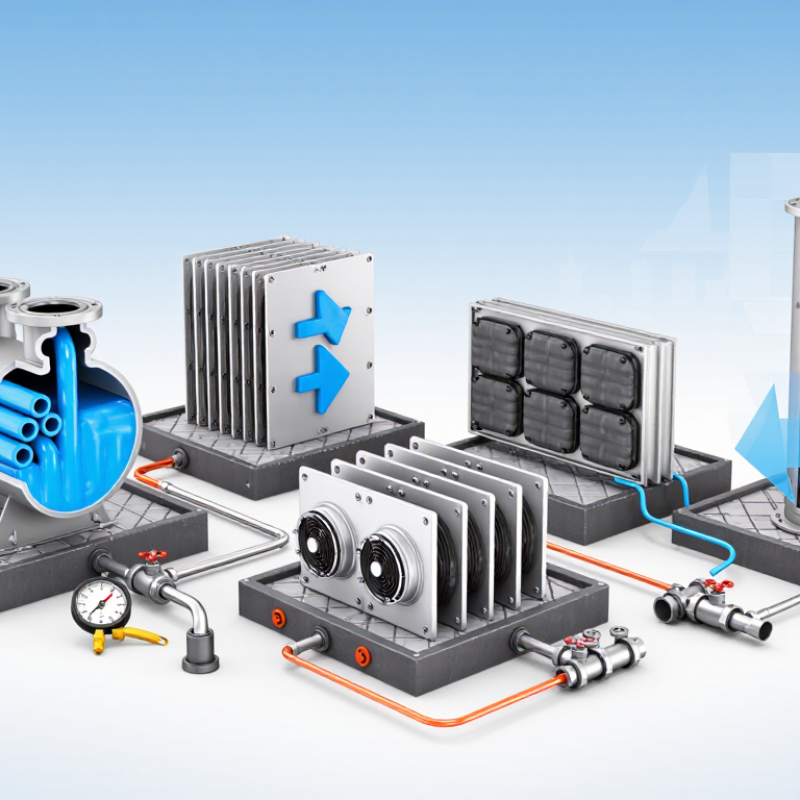
Common designs include shell-and-tube, tube-in-tube, and plate condensers. Shell-and-tube models suit larger systems and allow practical tube cleaning. Plate designs are compact and transfer heat efficiently, but they need clean water and careful filtration. In field inspections, technicians should check pressure, water temperature, flow rate, and refrigerant subcooling. These readings reveal performance more reliably than appearance alone.
Tips: Keep cooling water within the manufacturer’s quality limits. Hard water can create scale on heat-transfer surfaces. Corrosion may follow. Install strainers, water treatment, and accessible service connections. Leave room for tube brushing or plate replacement. It sounds simple. It is not always. Poor flow balance, seasonal water temperatures, or an undersized cooling tower can reduce capacity. A careful design review should include local climate, water availability, maintenance skills, and expected operating hours. Some selection decisions still require testing, because published efficiency values may not match real site conditions.
Which Water-Cooled Condenser Types Are Available in 2026?
2026 Best Water Cooled Condenser Types for Global Buyers
Which Water-Cooled Condenser Types Are Available in 2026?
Water-cooled condensers remain widely used in commercial cooling, process plants, and industrial refrigeration. Shell-and-tube condensers are the most familiar option. They handle high pressures well and allow relatively simple tube cleaning. Copper, stainless steel, and titanium tubes suit different water conditions. Material selection matters more than appearance.
Brazed plate condensers provide compact heat transfer and lower installation space. They work well where clean water and stable operating conditions are available.
Gasketed plate condensers offer easier inspection and capacity adjustment. However, gasket aging can create maintenance concerns.
Double-pipe condensers suit smaller systems, but their capacity range is limited. I have seen buyers choose a compact design too quickly. The smaller unit later struggled during peak summer loads.
Tips: Check water quality, flow rate, fouling risk, pressure drop, and local service access before purchasing. Ask for verified performance data at your actual entering-water temperature. A lower purchase price can mislead. Also review spare-part availability, cleaning procedures, corrosion protection, and energy performance. No single condenser type fits every project.
How to Compare Condenser Materials, Capacity, and Efficiency
2026 Best Water Cooled Condenser Types for Global Buyers
Choosing a water-cooled condenser starts with the operating water, not the brochure. Shell-and-tube units suit large systems and allow mechanical tube cleaning. Plate condensers are compact and transfer heat quickly. However, narrow passages may clog when water contains sediment or biological growth.
Copper tubes offer strong heat transfer, while stainless steel handles harsher water more reliably. Titanium is often considered for seawater applications, but its higher cost requires careful life-cycle comparison.
Compare capacity using heat rejection in kilowatts or refrigeration tons, not compressor size alone. Check the design water temperature, flow rate, condensing temperature, and allowable pressure drop.
A condenser may show excellent efficiency under laboratory conditions but perform differently in a hot coastal plant. Request certified performance data and clear test conditions. Inspect the approach temperature, because a smaller difference usually indicates better heat transfer.
Still, lower pressure drop can require larger equipment. The best balance is rarely the smallest unit.
Test the water before selecting materials. Ask about fouling allowances, tube thickness, cleaning access, spare parts, and local service skills. Leave practical space around the condenser for maintenance.
I have seen efficient systems lose performance because filters were ignored. This is an easy mistake, and technical comparisons should admit it.
Recheck capacity at the hottest expected water temperature, not only the rated point.
What Should Global Buyers Check Before Selecting a Supplier?
2026 Best Water Cooled Condenser Types for Global Buyers
Global buyers should compare shell-and-tube, brazed-plate, and evaporative condenser designs against actual site conditions. IEA’s The Future of Cooling report estimates that cooling already uses more than 10% of global electricity. That figure makes efficiency claims worth challenging. Ask suppliers for capacity at your entering water temperature, leaving water temperature, refrigerant, and fouling factor. A catalog rating is not enough.
Water quality deserves equal attention. Check tube material, corrosion resistance, allowable pressure, cleanability, and expected fouling rates. For plate designs, request gasket specifications and replacement access. For shell-and-tube units, inspect tube expansion methods and mechanical cleaning space. AHRI Standard 550/590 provides recognized methods for rating water-chilling systems, so ask whether test conditions follow an applicable certification procedure. Small details matter.
Supplier evidence should include factory test records, pressure-test results, energy data, spare-part availability, and local service capacity. UNEP reports that cooling demand may more than triple by 2050 without stronger efficiency action. A cheaper condenser may therefore create higher operating costs and water use. I would not trust a glossy efficiency sheet alone. Request independent verification when the project is large. Some buyers overlook maintenance labor, which is a costly mistake. Check the warranty wording carefully, especially exclusions linked to poor water treatment or installation.
How to Install, Maintain, and Operate a Water-Cooled Condenser?
Installing a water-cooled condenser requires careful planning around water flow, refrigerant safety, and service access. Place the unit on a rigid, level base with enough clearance for tube cleaning. Connect the water inlet to the designated port, usually against the refrigerant flow direction. Install isolation valves, a strainer, a flow switch, and pressure gauges near the connections. Flush the piping before commissioning. Dirty water can damage performance quickly. Qualified technicians should pressure-test refrigerant circuits and follow local codes and equipment instructions.
During startup, run the cooling-water pump before enabling the compressor. Open valves slowly and check for leaks at every joint. Record inlet water temperature, outlet temperature, water pressure, and condensing pressure. Stable readings usually indicate proper heat transfer. However, a single reading proves little. Compare readings under similar load conditions. Adjust water flow only within the specified operating range; excessive flow may cause erosion, while low flow can raise condensing pressure.
Maintenance depends heavily on water quality. Inspect the strainer regularly, especially after initial installation. Clean condenser tubes when temperature differences increase or capacity falls. Test water chemistry and control scale, corrosion, and biological growth through approved treatment methods. Keep service records with dates and measured values. I would not assume a clean exterior means a clean condenser. Internal fouling is easy to miss. Review alarms, vibration, and unusual noise during each inspection, and isolate energy sources before servicing.
2026 Best Water-Cooled Condenser Types for Global Buyers
Indicative overall heat-transfer coefficient ranges for commonly used water-cooled condenser designs. Higher values generally indicate more compact heat-transfer surfaces, while final selection depends on refrigerant, water quality, pressure drop, fouling risk, capacity, and local operating conditions.
Shell-and-tube condensers are widely used for large commercial and industrial systems because they are serviceable and tolerant of operating variation. Brazed plate and plate-and-shell designs can provide higher heat-transfer performance with a smaller footprint, but they require effective water filtration and scale control. During installation, maintain the correct water flow direction, provide isolation valves and strainers, and leave sufficient access for cleaning. During operation, monitor entering and leaving water temperatures, condenser pressure, flow rate, and water chemistry. Clean heat-transfer surfaces when fouling increases the approach temperature or pressure.
Data shown are indicative engineering ranges in W/m²·K and vary with refrigerant, fluid velocity, temperature difference, surface condition, and design configuration. Confirm final values with the equipment manufacturer and project design calculations.