How to Choose a Central Driving Concentrator in 2026

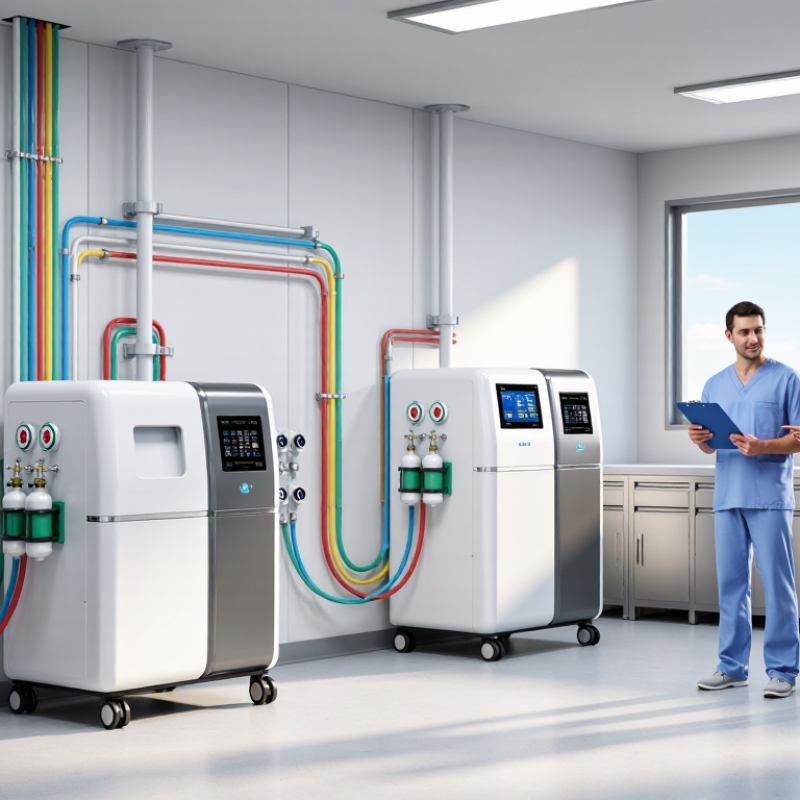
Choosing a Central Driving Concentrator in 2026 is not just a capacity decision. In a centralized medical oxygen system, the unit must deliver the required flow consistently, support the connected outlets, and remain serviceable when demand rises. WHO’s Technical Specifications for Oxygen Concentrators sets a minimum oxygen concentration of 82% for specified operating conditions. That benchmark is useful, but it is not a substitute for checking performance at the actual flow rate and workload your facility needs.

WHO Director-General Dr. Tedros Adhanom Ghebreyesus has described oxygen as “an essential medicine.” That principle makes reliability a clinical concern, not merely a purchasing detail. Compare rated flow, purity alarms, power-failure alerts, duty cycle, noise, energy use, and local maintenance support. Ask vendors to show test results under load, not only a headline specification. A quiet unit in a showroom can behave differently in a warm utility room with several outlets in use. Small detail. Big consequence.

This guide uses WHO technical guidance as a starting point and turns it into practical selection criteria for 2026. It also asks buyers to examine installation needs, spare-part availability, and the cost of downtime. Some product claims are difficult to compare directly. That deserves caution. The best choice is the system whose documented performance fits real demand, with clear service arrangements and room for future growth.
How to Choose a Central Driving Concentrator in 2026

Define the Intended Use and Required Oxygen Capacity

Before choosing a driving concentrator, define when and where oxygen will be used. Is it for short trips across town, long highway days, or regular travel between home and work? Note typical trip length, time away from a power outlet, and whether oxygen is needed while walking at stops. Small details matter. A crowded trunk can limit where equipment fits, and summer heat can affect how you store it.

Use the oxygen prescription as your starting point, not an online device setting. Ask the treating clinician to clarify the required flow, delivery mode, and activity level. Pulse-dose settings are not equivalent to continuous-flow liters per minute. Check that the concentrator can meet the prescribed need while you are seated in a moving vehicle, and confirm its performance at expected elevations. More capacity is not automatically better if the device cannot deliver the prescribed mode.

Test the setup before relying on it for a long drive. Run the concentrator from the vehicle’s power supply, check the cable reach, and listen for alarms with the engine on. Keep a realistic backup plan for delays or power failure, following clinical guidance. A neat checklist helps, but real trips are messy; a device that worked in the driveway may feel different after two hours on the road.

Compare Flow Rate, Concentration, and Operating Performance

How to Choose a Central Driving Concentrator in 2026

Flow rate is only useful when it matches the system’s real demand. WHO and UNICEF’s 2019 technical specifications cover oxygen concentrators in 5 L/min and 10 L/min classes. For a central installation, check peak simultaneous demand, not just the sum of typical bedside settings. A narrow tube run, leaking connector, or several open outlets can change delivery at the point of use. Test there, too.

Concentration needs checking across the working flow range. ISO 80601-2-69:2020 uses 82% oxygen concentration as a minimum performance threshold under specified test conditions. That threshold is not a target for every clinical use; follow the care team’s requirements and the equipment instructions. Record concentration and outlet pressure during a sustained load, then repeat after warm-up. Numbers drift.

Operating performance includes alarms, heat, noise, service access, and recovery after power interruption. A unit that meets its rated flow in a quiet room may behave differently in a hot, crowded utility space. Check the technical data sheet against measured output, and confirm maintenance intervals with a qualified technician. Paper ratings help. Real load tests matter more. One weakness: short acceptance tests can miss gradual output decline, so keep dated readings for comparison.

Assess Site Requirements, Power Supply, and Installation

Choosing a central driving concentrator in 2026 starts with the site, not the equipment brochure. List every point of use and estimate peak demand, including periods when several outlets operate together. Check the room’s dimensions, ventilation, temperature range, dust exposure, and service access. A unit that fits on paper may be difficult to maintain beside a wall or under low ductwork. Measure twice. Also consider noise and vibration near occupied spaces. Small details matter.

Power supply deserves a separate check. Confirm voltage, phase, current draw, and available circuit capacity with a qualified electrical professional. Ask how the system behaves during a power interruption, and whether backup arrangements match the site’s operating needs. Do not assume an existing outlet is suitable. Installation planning should cover delivery access, floor loading, pipe or cable routes, drainage where required, and clearances for routine maintenance. Record these conditions before ordering. It is easy to overlook a narrow doorway or a cable route that crosses a busy walkway. That mistake can delay commissioning. After installation, verify connections, alarms, operating readings, and airflow against the equipment documentation. Keep the results with maintenance records. A careful site review may feel slow, but correcting assumptions later is usually harder.

Check Safety Features, Certifications, and Service Support

Before choosing a driving oxygen concentrator, check how it handles real vehicle conditions. Ask for test documentation covering vibration, temperature changes, electrical stability, and alarm performance. A certification logo alone is not enough; confirm that the exact model and configuration are covered by current, applicable standards. Small details matter. Review the manual for low-power warnings, blocked-air-inlet alerts, and battery runtime at your prescribed settings. Make sure the unit can be secured without obstructing pedals, visibility, or ventilation. Your clinician should confirm that its delivery mode and flow settings meet your needs while travelling.

Service support matters just as much as specifications. Ask how quickly repairs are handled, whether loan units are available, and where routine maintenance can be completed. Check warranty limits, battery replacement costs, and the availability of filters and other consumables. Keep the support contact and troubleshooting steps somewhere easy to reach, not buried in a drawer. Before a longer drive, test the unit while parked and confirm its vehicle power connection works reliably. I would not assume a new battery solves every outage; cables, sockets, and airflow can also fail. That is a slightly inconvenient truth. Ask for written service terms, and note who to contact after hours.

How to Choose a Central Driving Concentrator in 2026

Check safety features, certifications, and service support. The chart counts relevant standard references by area; it is not a product score or a statement that every standard applies in every market.

Ask suppliers for applicable conformity documents and verify local regulatory requirements. Also check alarms, oxygen-concentration monitoring, power-failure alerts, maintenance intervals, spare-parts availability, and service response arrangements. Standards shown: IEC 60601-1 and IEC 60601-1-2; ISO 80601-2-69; ISO 14971; ISO 13485.

Compare Total Cost, Maintenance Needs, and Warranty Terms

A central driving concentrator should be compared over its expected service life, not by purchase price alone. Build a 10-year cost estimate covering installation, power, lubrication, inspections, spare parts, and planned downtime. For a thickener, check the drive’s rated torque against peak sludge load, not just normal operation. Ask whether the quoted price includes the rake, gearbox, control system, commissioning, and operator training. Small exclusions can become expensive.

Maintenance access matters. Inspect how technicians reach bearings, seals, and the drive assembly, and ask how quickly critical parts can be supplied. The U.S. Department of Energy’s Operations & Maintenance Best Practices guide reports that predictive maintenance may save 8–12% compared with preventive maintenance, and 30–40% compared with reactive maintenance. These figures cover maintenance programs broadly, not concentrators specifically, so treat them as context—not a guaranteed saving. Warranty terms deserve the same scrutiny: confirm duration, covered components, labor, wear-part exclusions, and whether missed service intervals can void coverage. I would still verify each clause in writing.

Tips: Request a sample maintenance schedule and a written list of warranty exclusions. Compare the cost of one realistic outage, too. A neat spreadsheet can miss messy site conditions.