How to Choose Stainless Steel Bearings for Your Applications?
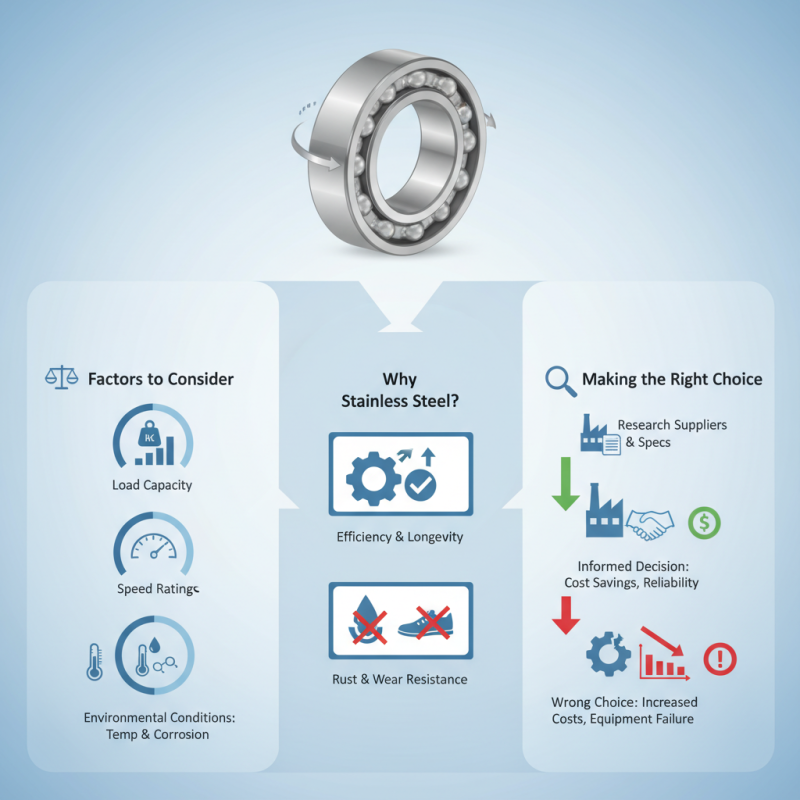
Choosing the right stainless steel bearings for your applications is crucial. These components are vital in various industries, from automotive to aerospace. High-quality stainless steel bearings can enhance efficiency and longevity.
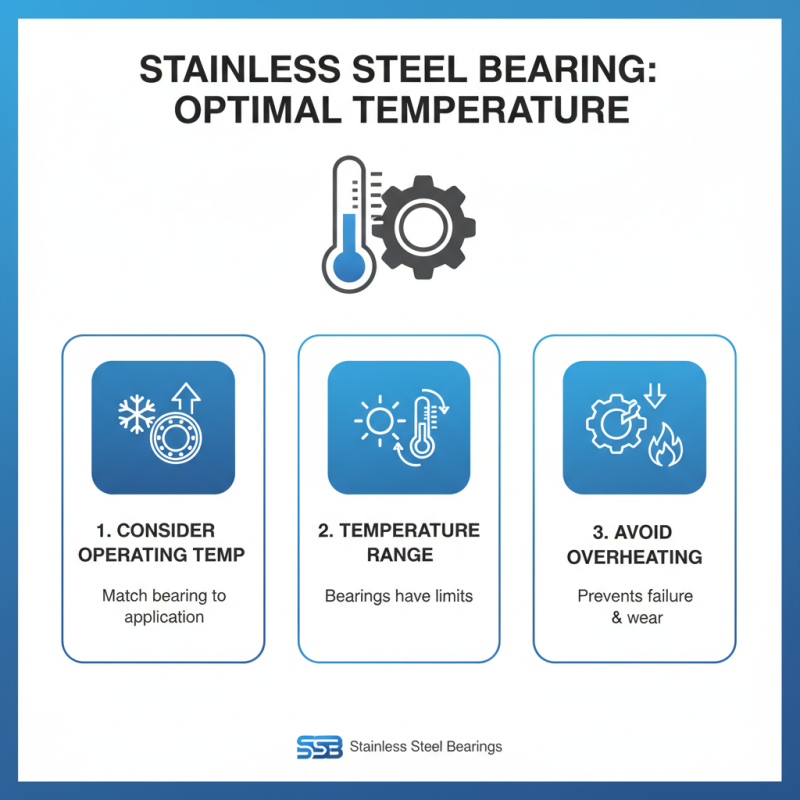
In selecting these bearings, consider factors such as load capacity, speed ratings, and environmental conditions. For instance, extreme temperatures and corrosive environments can affect performance. Stainless steel bearings are often preferred for their resistance to rust and wear.
However, not all stainless steel bearings are created equal. Some may not meet specific needs or standards. It’s essential to research suppliers and product specifications. Making the wrong choice may lead to increased costs or equipment failure. Therefore, careful consideration is key to making an informed decision.
Factors to Consider When Choosing Stainless Steel Bearings for Applications
When choosing stainless steel bearings for your applications, several factors deserve attention. The environment is crucial; bearings used in corrosive or humid settings require specific grades of stainless steel. For instance, marine applications often need higher resistance to saltwater.
The load capacity of the bearings can also vary. Overestimating your load requirements may lead to premature failure.
Precision is another aspect to consider. Bearings designed for high-speed operations typically have tighter tolerances. A small deviation can cause vibrations, leading to significant performance issues. Always check the lubrication method as well. Insufficient lubrication can damage even the best bearings. If you overlook lubrication, it might result in costly repairs.
Lastly, think about maintenance. Some bearings require more upkeep than others. Understand your application's demands and the servicing frequency needed. Mechanical failures often occur due to neglected maintenance. Finding the right balance between performance and upkeep is essential. Take time to research various options before making a choice. Every detail matters in achieving optimal results.
Understanding the Types of Stainless Steel Used in Bearings
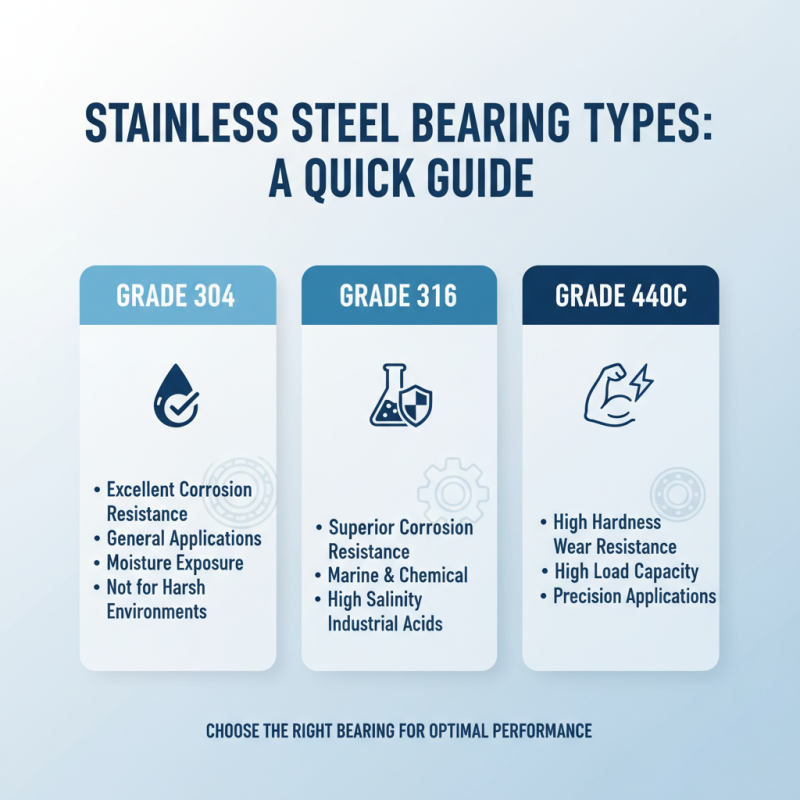
When selecting stainless steel bearings, understanding the types of stainless steel is crucial. Various grades serve different needs. The most common grades are 304, 316, and 440C. Grade 304 is known for its excellent corrosion resistance. It is often used in general applications where exposure to moisture is a concern. However, it may not perform well in harsher environments.
Grade 316 offers even better corrosion resistance, especially in saltwater environments. This makes it suitable for marine applications. But one must consider its lower hardness, which may not be ideal for heavy loads. On the other hand, Grade 440C is a high-carbon stainless steel. It provides superior hardness and wear resistance, making it suitable for high-speed applications. However, its corrosion resistance is not as strong as 304 or 316.
Choosing the right grade requires careful thought. Consider the environment and load conditions. The decision impacts the performance and longevity of the bearings. A misjudgment here could lead to premature failures. It's important to weigh the pros and cons of each type thoughtfully.
Evaluating Load Capacity and its Impact on Bearing Selection
When selecting stainless steel bearings, load capacity is crucial. It directly affects the bearing's performance and durability. Each application has unique load requirements. Misjudging these can lead to premature failure. It's essential to consider both static and dynamic load ratings. Static loads occur when the bearing is stationary. Dynamic loads happen during operation. Both must be evaluated carefully.
Understanding the environment is also important. Factors like temperature, humidity, and contamination affect performance. Bearings in harsh environments require extra attention to load capacity. Sometimes, users underestimate the impact of these conditions. Choosing incorrectly can result in higher maintenance costs. Regular checks and adjustments to specifications may be necessary. This keeps the bearings functioning optimally.
Choosing the right load capacity requires careful analysis. It's a balance between performance and expected lifespan. Too much load can lead to failure. Too little may result in inefficient operation. Keep in mind the specific needs of your application. Taking time to evaluate these factors prevents costly mistakes.
How to Choose Stainless Steel Bearings for Your Applications?
| Bearing Type |
Load Capacity (kg) |
Operating Temperature (°C) |
Speed Rating (RPM) |
Ideal Application |
| Deep Groove Ball Bearing |
200 |
-20 to 120 |
3000 |
Electric Motors |
| Angular Contact Ball Bearing |
300 |
-10 to 150 |
4000 |
Machine Tools |
| Self-Aligning Ball Bearing |
250 |
-30 to 100 |
2500 |
Conveyor Systems |
| Thrust Ball Bearing |
150 |
-20 to 120 |
1500 |
Support Structures |
| Spherical Roller Bearing |
350 |
-20 to 120 |
1800 |
Heavy Machinery |
The Role of Corrosion Resistance in Stainless Steel Bearings
Corrosion resistance is a critical factor when selecting stainless steel bearings. These bearings are often used in harsh environments. Moisture, chemicals, and salts can lead to damage. If corrosion occurs, it can compromise performance. Choosing the right grade of stainless steel is essential. Different grades offer varying levels of resistance to rust and corrosion.
For example, 316 stainless steel has superior resistance compared to 304. It can withstand salty and chlorinated environments. However, it might be more expensive. This cost consideration often leads to tough choices. Do you prioritize performance or budget? Reflecting on your application's demands is crucial. Sometimes, the cheaper option fails sooner than expected.
Additionally, think about lubrication. Proper lubrication can enhance the lifespan of stainless steel bearings. It reduces wear and helps prevent the onset of corrosion. Yet, maintenance routines are often overlooked. Regular checks can save time and money. Overlooking this aspect can lead to unexpected failures. It's imperative to stay proactive and attentive to corrosion-related challenges.
Stainless Steel Bearings Corrosion Resistance Comparison
This bar chart illustrates the corrosion resistance ratings of various stainless steel grades used in bearings. Grade 316 is noted for its exceptional resistance to corrosion, making it a popular choice for applications in harsh environments.


' d='M0 0h21v15H0z'/%3E%3Cpath fill='url(%23b)' d='M0 0h21v5H0z'/%3E%3Cpath fill='url(%23c)' d='M0 5h21v5H0z'/%3E%3Cpath fill='url(%23d)' d='M0 10h21v5H0z'/%3E%3C/g%3E%3C/svg%3E)