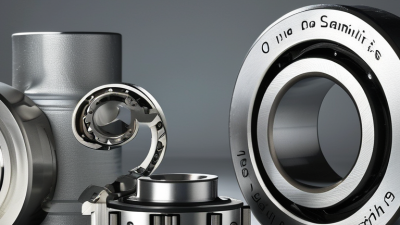
How to Choose the Right Ceramic Bearing?
Choosing the right ceramic bearing requires more than selecting the hardest available material. The correct choice depends on speed, load, temperature, lubrication, contamination, and shaft alignment. A bearing that performs beautifully in a laboratory may struggle in a dusty production line.
Dr. Michael J. Neale, a respected bearing and tribology authority, offered a practical principle: “Bearing selection must begin with the application, not the material.” This idea remains highly relevant when comparing hybrid ceramic bearings with full-ceramic designs. Silicon nitride rolling elements can reduce friction and improve electrical insulation. Zirconia rings may offer strong corrosion resistance and useful dimensional stability. However, neither option solves every engineering problem.
Look closely at the operating details. Measure radial and axial loads. Record the actual rotational speed, not only the motor rating. Check whether water, chemicals, metal particles, or poor lubrication may enter the housing. Even a small misalignment can create uneven contact and premature wear. The cage material also matters, especially at high speed.
The answer is rarely perfect.
A ceramic bearing may deliver lower heat generation, longer service life, and quieter operation. It may also cost more and require tighter installation control. That trade-off deserves honest evaluation. This guide explains how to compare bearing materials, internal clearances, seals, precision grades, and lubrication methods. It also highlights common selection mistakes. Real-world performance depends on the complete bearing system, not one impressive specification. In some applications, a quality hybrid design may be wiser than a full-ceramic solution. That conclusion can feel less exciting, but it is often more reliable.
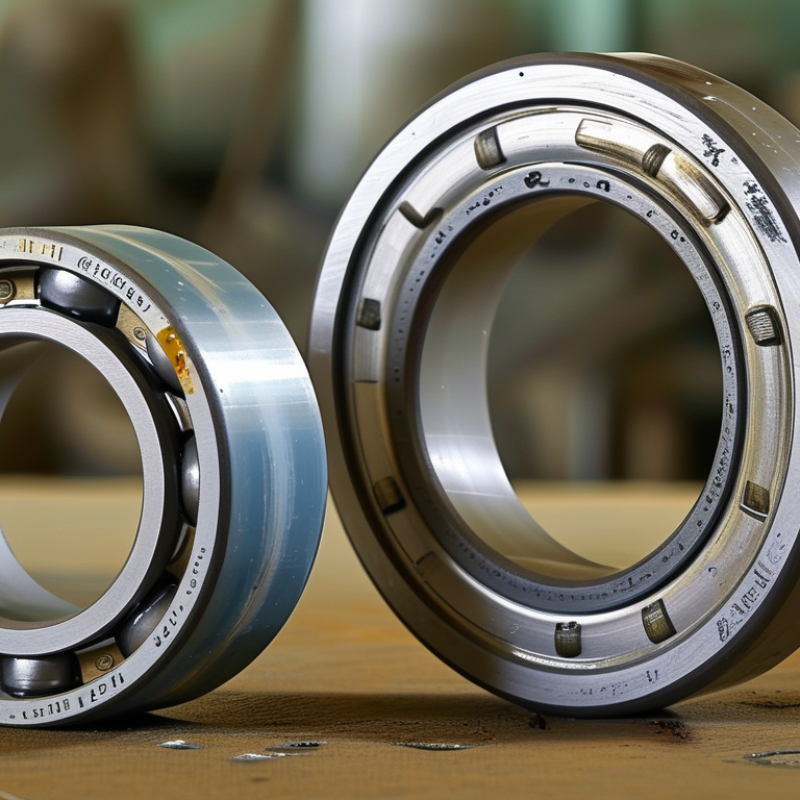
Define the Operating Conditions for the Ceramic Bearing
Choosing the right ceramic bearing begins with defining its operating conditions. Record the radial and axial loads, shaft speed, temperature range, and expected service hours. A bearing used at 12,000 rpm faces different demands from one carrying a slow, heavy load. Measure it. Do not rely on a rough estimate.
Check the surrounding environment carefully. Dust, moisture, chemicals, vibration, and electrical current can change the selection. Ceramic rolling elements often reduce electrical conduction, while the rings and cage still require suitable protection. Lubrication also matters. Oil, grease, or dry running each creates different friction and heat levels. Confirm viscosity, relubrication intervals, and compatibility with seals before choosing the bearing.
Fit and precision deserve equal attention. Measure the shaft and housing, then calculate the correct clearance under actual temperatures. Excessive interference may increase preload and heat. Excessive clearance may cause vibration and uneven contact. That assumption can be wrong. A clean installation, controlled torque, and proper alignment often matter as much as the bearing material. Record noise, temperature, and vibration during a trial run. These details reveal whether the selected ceramic bearing matches the real machine, not merely its specification sheet.
Choose the Most Suitable Ceramic Bearing Material
Choosing the right ceramic bearing material starts with the operating environment, not the catalogue title. Silicon nitride is often preferred for high-speed hybrid bearings because its density is about 3.2 g/cm³, compared with roughly 7.8 g/cm³ for bearing steel. ASM Handbook, Volume 18, reports that this lower density can reduce centrifugal loading and improve speed capability. Silicon nitride also offers strong wear resistance and electrical insulation. It is a practical choice for motors, machine tools, and contaminated production areas.
Alumina provides excellent electrical insulation and chemical stability. Its density is approximately 3.9 g/cm³, according to typical values compiled in ASM material data. However, alumina is more brittle under impact. It suits clean, controlled applications better than heavy shock loading. Zirconia has higher fracture toughness than alumina and a thermal expansion closer to steel. The same data sources place its density near 6.0 g/cm³. That difference may increase rotational load, even when the bearing feels robust.
Temperature changes require careful checking. NASA tribology research has shown that thermal expansion mismatch can alter bearing preload and contact stress. I once treated temperature capability as the main selection factor. That was too narrow. Lubrication, shaft fit, cage material, and mounting accuracy can matter just as much. A bearing may survive 300°C in a laboratory test, yet fail earlier with poor alignment. Check ISO 26602 requirements and the supplier’s tested speed, load, and lubrication data before choosing full ceramic or hybrid construction.
Match the Bearing Design to the Application
Choosing the right ceramic bearing starts with the application, not the material.
A hybrid ceramic bearing, with ceramic balls and steel rings, suits high-speed electric motors and precision spindles. Its lighter balls can reduce centrifugal force and heat. However, the steel rings still need protection from moisture and corrosion. For chemical equipment or washdown areas, a full ceramic bearing may offer better resistance. It also provides electrical insulation, which can help prevent current-related damage in rotating equipment.
Match the bearing design to the load direction. Deep-groove designs handle common radial loads and moderate axial loads. Angular-contact bearings support combined loads, especially where shaft preload matters. Thrust bearings are more suitable for strong axial forces. Check the shaft speed, operating temperature, housing fit, and expected vibration before choosing. A bearing that fits perfectly on paper may fail early if the clearance is wrong.
Keep contamination in view. Fine dust can scratch ceramic surfaces, while excessive lubrication can create heat at high speed. Use seals when the environment is dirty, but remember that seals may increase friction. I once saw a precision assembly run hotter after adding heavier grease. The problem was not the bearing grade. It was the lubrication choice. Testing under real load remains essential, because catalog values rarely show every weakness in the installation. Sometimes, the “best” ceramic bearing is simply the one whose design is not being asked to do too much.
Evaluate Load, Speed, Lubrication, and Temperature Limits
How to Choose the Right Ceramic Bearing?
Start with the actual load, not the catalogue rating alone. Record radial, axial, and shock loads during operation. A bearing beside a cutting spindle may face vibration, dust, and sudden acceleration. Ceramic rolling elements can reduce friction, but they do not make an overloaded design safe. Compare the calculated load with the bearing’s static and dynamic ratings. Leave a sensible safety margin. Measure, do not guess.
Speed changes the selection. High rotational speed increases heat, lubricant stress, and cage demands. Check the limiting speed under your real preload and operating conditions. Lubrication also needs careful attention. A light oil may suit fast rotation, while grease can protect against moisture and simplify maintenance. Too much grease creates drag. Too little causes premature wear. Small details matter.
Temperature limits must include startup, shutdown, and nearby heat sources. Ceramic materials tolerate high temperatures well, but seals, cages, lubricant, and clearance may fail earlier. Check the complete bearing assembly, not only the ceramic material. In practice, technicians sometimes select a high-speed bearing, then overlook thermal expansion in the housing. That mistake can increase preload unexpectedly. I would also review contamination control, shaft fit, and installation force before approval. A clean workbench and calibrated tools often prevent more damage than an expensive upgrade.
| Evaluation Dimension | Hybrid Bearing Silicon Nitride Balls + Steel Rings |
Full Ceramic Bearing Silicon Nitride Rings and Balls |
Hybrid Bearing Zirconia Balls + Steel Rings |
Full Ceramic Bearing Zirconia Rings and Balls |
|---|---|---|---|---|
| Typical Application | High-speed electric motors, machine-tool spindles, pumps, compressors, and precision equipment | Electrical insulation, vacuum-compatible mechanisms, corrosive environments, and applications requiring very low friction | Moderate-speed equipment requiring electrical insulation and improved corrosion resistance | Corrosive, chemically exposed, electrically insulated, or lightly loaded applications |
| Relative Radial Load Capacity | High Usually the closest ceramic option to an equivalent all-steel bearing; final capacity depends on ring material, internal clearance, and bearing geometry |
Medium Typically lower than an equivalent steel-ring bearing because ceramic rings have lower fracture toughness and require careful mounting |
Medium to high Generally suitable for moderate loads, but usually less favorable than silicon nitride for high-speed or heavily loaded designs |
Low to medium Best suited to light or moderate loads with controlled shock and installation conditions |
| Axial and Shock Load Suitability | Good for moderate axial loads Not normally preferred for severe impact, misalignment, or uncontrolled shock loading |
Limited under shock loading Use conservative preload, accurate shaft and housing fits, and controlled assembly procedures |
Good for light-to-moderate axial loads Avoid sudden impact and excessive preload |
Limited Use only where impact, vibration, and mounting stresses are well controlled |
| Typical Speed Capability | High Common engineering starting range: approximately 0.8–1.5 million DN, subject to cage design, lubrication, preload, heat removal, and bearing size |
Medium to high Approximately 0.5–1.2 million DN may be achievable with suitable design; cage and lubricant limits often govern actual speed |
Moderate Approximately 0.4–0.9 million DN is a practical starting range for many designs; verify thermal behavior carefully |
Low to moderate Often selected below approximately 0.5 million DN unless specifically designed and tested for higher speed |
| Friction and Heat Generation | Low rolling friction and reduced sliding tendency; commonly selected to lower operating temperature at high speed | Very low rolling friction and no steel-to-steel contact; heat removal and lubricant selection remain important | Low to moderate friction; generally less suitable than silicon nitride for the highest-speed operation | Low friction at light loads; friction may rise if the bearing is overloaded, misaligned, or poorly lubricated |
| Lubrication Requirement | Oil or grease is normally recommended for high-speed and high-load operation; oil-air or oil-jet systems may be used for heat removal | Can operate with grease, oil, or dry-film lubrication depending on load, speed, atmosphere, and cage material; dry running is not automatically acceptable | Grease or oil is normally recommended; select lubricant viscosity and quantity for the required speed and temperature | Can be used with grease, oil, or specialized dry lubrication in suitable conditions; avoid assuming lubricant-free operation under load |
| Lubrication Sensitivity | High at high speed Insufficient lubricant can cause rapid temperature rise, while excessive grease can increase churning and torque |
High Low friction does not eliminate the need to control lubricant compatibility, contamination, and heat dissipation |
Moderate to high Use a lubricant compatible with steel rings, seals, cage materials, and the operating temperature |
Moderate Contamination and lubricant degradation can still cause wear, torque increase, and premature failure |
| Continuous Temperature Guidance | Typically limited by steel rings, cage, seals, and lubricant; approximately −40°C to +150°C is common with suitable components | Approximately −40°C to +250°C may be possible with suitable ceramic, cage, seal, and lubricant choices; dry or special designs can differ substantially | Typically limited by steel rings, cage, seals, and lubricant; approximately −40°C to +150°C is a common design range | Approximately −40°C to +180°C is a practical starting range for lubricated designs; the cage and lubricant may impose lower limits |
| Electrical Insulation | Not fully electrically insulated because the steel rings provide a conductive path | Excellent Entire bearing is electrically insulating when ceramic-compatible components and nonconductive mounting conditions are used |
Improved insulation through the ceramic balls, but steel rings still provide a conductive path | Excellent Suitable for applications requiring a nonconductive bearing structure |
| Corrosion Resistance | Better than all-steel bearings at the rolling elements, but steel rings still require corrosion protection | Very good Suitable for many corrosive environments when seals, cage, lubricant, and mounting hardware are also compatible |
Better corrosion resistance at the rolling elements, but steel rings remain vulnerable without appropriate protection | Very good Suitable for many wet or chemically exposed environments, subject to material compatibility testing |
| Recommended Load-to-Speed Balance | Best general-purpose choice for high speed plus moderate-to-high load | Best where electrical insulation, corrosion resistance, or low friction is more important than maximum load capacity | Suitable for moderate speed and moderate load where cost, insulation, and corrosion resistance must be balanced | Best where chemical resistance, electrical insulation, and low load are the primary requirements |
| Main Selection Caution | Do not rate the bearing only by ceramic ball material; steel-ring fatigue life, preload, lubrication, and heat removal remain decisive | Check mounting stresses, ring fracture risk, preload, housing rigidity, and thermal expansion before selection | Verify speed, temperature, and lubricant performance because zirconia is denser than silicon nitride and may generate greater centrifugal effects | Control shock, misalignment, mounting interference, and thermal gradients; full ceramic construction is not automatically suitable for heavy loads |
| Engineering note: The speed and temperature values above are general design starting ranges, not guaranteed ratings. Actual limits depend on bearing size, cage material, internal clearance, preload, load direction, lubrication method, sealing, shaft and housing fits, contamination, heat dissipation, and duty cycle. Confirm the final selection through manufacturer calculations, application testing, and applicable bearing-life standards. | ||||
Verify Quality, Compatibility, and Installation Requirements
Choosing the right ceramic bearing starts with verification, not appearance. Check the ceramic grade, steel or ceramic raceways, load rating, clearance, seals, and operating temperature. ISO 281:2007 defines L10 life as the point where 10% of identical bearings may fail. For ball bearings, calculate L10 using the exponent p = 3. A higher ceramic content does not automatically mean longer life.
Compatibility matters in real machines. Ceramic rolling elements reduce electrical-current damage, but insulation alone cannot correct excessive preload or poor alignment. Compare shaft diameter, housing fit, speed, radial load, and axial load against the manufacturer’s technical data. ISO 15243:2017 identifies failures linked to contamination, mounting damage, fatigue, and lubrication problems. Keep the bearing package sealed until installation. One grain of dust can matter.
Installation quality is often underestimated. Use a clean bench, calibrated tools, and force applied only to the fitted ring. Never drive through the rolling elements. Confirm shaft runout and housing concentricity before tightening. The U.S. Department of Energy reports that motor-driven systems consume about 69% of industrial electricity in the United States, so small friction losses deserve attention. Still, ceramic bearings are not magic. I have seen expensive components fail after careless handling. That result deserves honest review. (References: ISO 281:2007; ISO 15243:2017; U.S. Department of Energy, Motor Systems guidance.)
Related Posts
-
China Top 10 Flanged Bearings Suppliers What You Need to Know?
-
Understanding the Basics of Ball Bearing Selection for Optimal Performance
-
Understanding the Role of Small Bearings in Everyday Machines
-

The Ultimate Guide to Ball Transfer Units in 2025 Exploring Top Choices
-
How to Choose the Right Small Ball Bearings for Your Project
-
Ultimate Tips for Choosing Precision Ball Bearings Wisely?