2026 How to Choose the Right Pneumatic Seals

Compressed air systems can look simple from the outside: a cylinder moves, a valve shifts, and a seal keeps air where it belongs. Yet choosing the right Pneumatic Seals takes more than matching a part number. A mismatch in material, size, or installation can lead to leakage, sluggish movement, extra maintenance, or premature wear. Small details matter. A seal operating in a clean indoor workshop may face very different conditions from one exposed to dust, washdown, or frequent cycling. Those differences deserve attention before a replacement is ordered.

In 2026, a sound selection process still begins with the equipment’s actual operating conditions. Check the cylinder or valve documentation for dimensions, pressure range, temperature limits, and approved seal materials. Consider air quality, lubrication practices, stroke speed, and how often the equipment cycles. A seal that performs well in a short test may not last through months of rapid operation. Material compatibility charts and manufacturer guidance can narrow the options, but they cannot replace accurate measurements or a review of the application. This guide explains the practical factors behind seal selection, from elastomer choice and profile to fit and maintenance. It also points out where assumptions can mislead. There is no universal seal for every pneumatic system, and some application details may be missing from older records. When they are, verify the specifications before making a change.
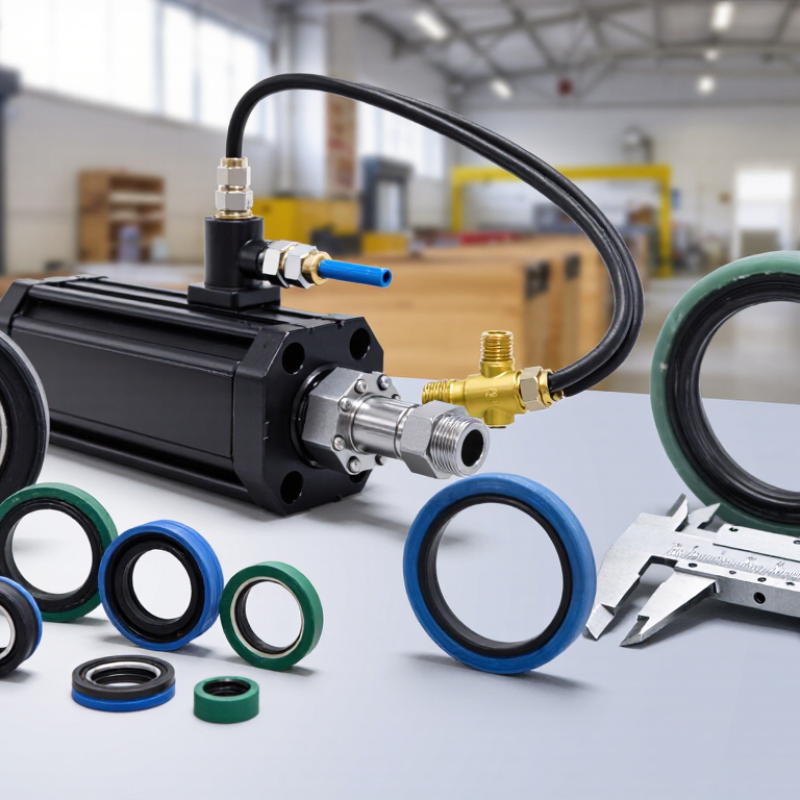
2026 How to Choose the Right Pneumatic Seals

Understanding Pneumatic Seals and Their Function

2026 How to Choose the Right Pneumatic Seals

Understanding Pneumatic Seals and Their Function

Pneumatic seals help contain compressed air inside cylinders and valves. A piston seal limits air passing between the piston and cylinder wall, while a rod seal reduces leakage around the moving rod. Some designs also help keep dust and moisture out. When seals work properly, equipment can move smoothly and maintain pressure. Small parts matter. Air is not always clean.

Choosing a seal means matching it to the actual job. Check operating pressure, temperature, movement speed, and the air’s lubrication and cleanliness. The seal material must suit those conditions, while its profile and groove must fit the equipment. A mismatch may cause excess friction, leakage, or early wear. Inspect the cylinder surface, too; scratches can damage even a suitable seal. It is easy to focus on the seal alone, but the surrounding parts matter just as much.

Tips: Compare the equipment specifications with the seal dimensions before installation. Keep seals clean, avoid twisting them during fitting, and use only compatible lubricant when required. After startup, watch for pressure loss, unusual drag, or visible wear. If performance changes, inspect the full sealing area rather than replacing parts by guesswork. A seal can look fine and still be wrong for the operating conditions.

Identifying Application and Cylinder Requirements

2026 How to Choose the Right Pneumatic Seals

Identifying Application and Cylinder Requirements

A pneumatic seal must match the work, not just the cylinder size. Note operating pressure, temperature, cycle speed, and expected hours of use. A small positioning cylinder may run thousands of short strokes each shift. A press cylinder faces different loads and wear. Check the air supply, too. Moisture, compressor oil, and dust can affect seal life. Dry-running service needs particular attention.

Measure the cylinder bore and rod, then inspect the seal groove and available clearance. Record stroke length and operating speed. A long stroke can generate more heat, while a worn rod may cut a new seal quickly. Look for scoring, corrosion, or uneven contact. Surface finish matters. So does alignment. Side loading is easy to overlook, especially when a cylinder appears to move smoothly without a load.

Choose the seal profile and material for the actual pressure, temperature, and air quality. Confirm that the design can resist extrusion through the clearance gap at peak pressure. Consider installation space and whether the seal must tolerate occasional dry starts. A tidy specification sheet can still miss a rough rod or a damp air line. Measure twice. If wear patterns are unclear, record them before replacing parts; the first diagnosis may be wrong. Keep those observations with the cylinder’s maintenance history.

Comparing Seal Materials and Profile Types

For pneumatic seals, material and profile should be selected together. Polyurethane often handles sliding wear well, making it useful for piston and rod seals in frequently cycling cylinders. Nitrile rubber suits many general-purpose systems and tolerates common lubricants, but heat and chemical exposure can narrow its service range. Fluoroelastomer can suit hotter or more chemically demanding conditions, though it may be unnecessary in ordinary shop air. PTFE offers low friction, but its limited elasticity often means the design needs an energizer or careful groove support. Small details matter. Check the actual temperature, pressure, speed, lubricant, and moisture—not just the material’s headline properties.

Profile controls how the seal behaves in its housing. A U-cup can use system pressure to improve contact, while an O-ring is compact and versatile when its groove is designed correctly. Piston seals separate pressure zones inside the cylinder; rod seals limit leakage along the moving shaft. Wipers keep dust and debris from entering, but they do not replace a pressure seal. Not always. Two seals made from the same compound can perform differently because their profiles, clearances, and surface finishes differ. I have seen material selection get most of the attention, while a sharp edge or poor alignment quietly causes early wear. Check the manufacturer’s dimensional data, then verify fit and motion in the real assembly.

Checking Operating Conditions and Compatibility

Start with the actual duty cycle, not ideal catalog conditions. Record minimum and peak pressure, piston speed, stroke length, temperature, and exposure to lubricant or condensate. A seal in a slow clamp may behave differently from one cycling quickly in a hot actuator. Check whether pressure reverses or air becomes trapped behind the sealing lip. Small details matter.

Material compatibility needs equal care. Compare the seal compound with cylinder lubricant, cleaning fluids, moisture, and the expected temperature range. Confirm the specified hardness and groove dimensions. ISO 4414:2010 sets safety requirements for pneumatic fluid-power systems, but it cannot select a seal material for every application. Request documented compatibility data, and test representative parts under real operating conditions when failure could halt production. A neat datasheet is not enough.

Energy matters too. The U.S. Department of Energy’s Improving Compressed Air System Performance sourcebook reports that compressed-air systems commonly use about 10% of electricity in manufacturing, with some plants exceeding 30%. A worn seal can waste energy, though actual losses depend on pressure, leak size, and operating hours. Inspect for audible hissing, uneven motion, and pressure decay. Condensate is easy to underestimate. It can affect lubrication and accelerate wear. Recheck the seal after commissioning, not only during installation.

Selecting, Installing, and Maintaining the Seal

Choosing the right pneumatic seal starts with the real operating conditions, not just cylinder diameter. Record pressure, stroke speed, temperature, lubricant, and exposure to dust or moisture. A seal that performs well on a clean test bench may fail early in a hot, gritty workshop. Check the piston-to-bore clearance too; excessive clearance can let a seal extrude under pressure. Material choice matters. So does the groove. There is no perfect shortcut.

Installation can undo a good selection. Clean the groove, remove burrs, and use a compatible lubricant. Stretching or twisting a seal during fitting can create damage that is hard to see. The U.S. Department of Energy’s Improving Compressed Air System Performance sourcebook estimates that leaks can waste 20–30% of compressor output; effective leak programs can reduce losses below 5–10%. Those figures cover system leakage, not seal failure alone, but they show why small leaks deserve attention. After startup, check for pressure loss and listen near the cylinder. Inspect seals when motion becomes jerky or air use rises. A fixed replacement schedule is convenient, yet it may miss wear—or replace sound parts too soon. Note the operating conditions each time. That record is not always complete, but it is useful.

2026 How to Choose the Right Pneumatic Seals - Selecting, Installing, and Maintaining the Seal

Use this guide to compare common pneumatic seal profiles, select suitable materials, and follow practical installation and maintenance checks. Confirm final limits against the seal manufacturer’s technical data and the cylinder design.

Seal Selection Guide

Seal Type Typical Location and Function Common Material Choices Suitable Conditions Selection Checks
Piston seal Fits on the piston and separates the two sides of a cylinder. Used in single-acting or double-acting cylinders, depending on profile. Polyurethane (PU), nitrile rubber (NBR), or PTFE-based assemblies. Choose a profile designed for the cylinder’s direction of action, pressure, speed, and lubrication conditions. Check bore diameter, groove dimensions, extrusion gaps, pressure rating, and whether the seal must work in both directions.
Rod seal Installed in the cylinder head to retain air around the moving piston rod. PU or NBR; PTFE-based designs may be used where low friction or specific operating conditions are required. Must tolerate reciprocating motion, side loads within the cylinder design, and the specified pressure and speed. Check rod diameter and finish, seal orientation, gland dimensions, and the manufacturer’s limits for pressure and sliding speed.
Rod wiper / scraper Located at the rod exit to remove dust, moisture, and other contaminants from the rod surface. Often PU or NBR; material depends on the contaminant and temperature exposure. Useful where external contamination could be carried into the cylinder by the retracting rod. Choose a lip compatible with the environment; a wiper does not replace a pressure-retaining rod seal.
O-ring Used for static joints, end caps, ports, or other compatible glands; may also serve in some low-demand dynamic designs. NBR is common for general compressed-air service; other elastomers may be needed for specific media or temperatures. Most predictable in correctly designed static glands. Dynamic use requires suitable surface finish, squeeze, clearance, and motion limits. Match cross-section and groove dimensions; avoid twisting, excessive stretch, over-compression, and sharp gland edges.
Guide ring / wear band Guides the piston or rod and helps prevent metal-to-metal contact; it is not a pressure seal. Commonly PTFE-based or other engineered bearing materials. Useful where side loads or alignment needs make a separate bearing surface appropriate. Check bearing load, clearance, width, material compatibility, and the cylinder designer’s guidance.
Static flange or end-cap seal Seals a stationary interface between cylinder components or fittings. NBR O-ring or another elastomer selected for the air, lubricant, and temperature conditions. Suitable when mating surfaces and gland geometry are designed for a static seal. Inspect the mating faces and groove; tighten fasteners evenly to the specified assembly requirements.

Material and Operating Considerations

Material Typical Characteristics Indicative Temperature Range Points to Verify
NBR (nitrile rubber) Common, economical elastomer with good general resistance to mineral oils and many lubricated-air applications. Approximately −30°C to +100°C (−22°F to +212°F) for many compounds. Temperature limits vary by compound. Check compatibility with the actual lubricant, cleaning agents, and compressed-air contaminants.
PU (polyurethane) Often selected for abrasion resistance and wear performance in reciprocating pneumatic seals. Approximately −30°C to +80°C (−22°F to +176°F) for many standard compounds; some grades allow higher temperatures. Confirm grade-specific temperature, hydrolysis, chemical, and pressure limits. Do not assume all PU formulations have the same properties.
PTFE-based materials Low friction and broad chemical resistance; often used in engineered seal assemblies rather than as an unsupported elastomeric lip. PTFE resin can have a broad material range, often cited near −200°C to +260°C (−328°F to +500°F); assembly limits can be much narrower. Check fillers, energizer material, seal design, speed, and extrusion support. Resin limits are not automatically the operating limits of a complete seal.
Other elastomers Specialty compounds may be appropriate for unusual temperature, media, or environmental requirements. Depends on the exact compound and seal construction. Verify compatibility and dynamic suitability using compound-specific data; a material’s general chemical resistance alone is not sufficient.

Temperature note: Ranges are indicative values for common material families, not guaranteed ratings. A seal’s allowable operating range also depends on compound formulation, pressure, speed, lubrication, gland design, and exposure duration.

Installation and Maintenance Checklist

Stage Recommended Action Why It Matters
Before installation Confirm seal profile, material, size, groove dimensions, pressure rating, and operating conditions. Inspect the seal and cylinder components for damage or contamination. Incorrect sizing, damage, or incompatible materials can cause leakage or early wear.
Prepare components Clean the bore, rod, grooves, and mating surfaces. Remove burrs and sharp edges; protect sealing lips from ports, threads, and keyways during assembly. Debris and sharp edges can cut, nick, or contaminate the seal during installation.
Fit the seal Use the specified assembly method and a compatible installation lubricant when permitted. Avoid twisting O-rings or stretching seals beyond their installation limits. Twisting, over-stretching, and incompatible lubricants can damage the seal or affect sealing performance.
Commission Reassemble according to the equipment instructions, restore air gradually, and check for leaks, abnormal motion, or excessive friction. Controlled pressurization helps identify installation problems before normal operation.
Routine inspection Look for air leakage, increased cycle time, irregular motion, rod scoring, contamination, and unusual noise. Follow the equipment maker’s inspection schedule. Changes in performance can indicate seal wear, contamination, misalignment, or a separate pneumatic fault.
Replacement Depressurize and isolate the equipment before disassembly. Replace damaged seals with correctly specified parts and investigate the cause of failure before returning the cylinder to service. Replacing a seal without addressing contamination, poor alignment, surface damage, or incorrect conditions may lead to repeat failure.