What Are the Top 10 Prefabricated Building Types?
Choosing among prefabricated systems is not a simple design exercise. A Prefabricated Building can arrive as a finished module, a wall panel, or a structural frame. Each option changes the project’s cost, schedule, transport needs, and construction risks.
This article examines ten widely used prefabricated building types. They include modular buildings, panelized homes, precast concrete structures, steel frame systems, timber frame buildings, and container-based spaces. It also considers prefabricated schools, healthcare facilities, offices, and multi-story housing. These categories overlap in practice. That makes comparison harder.
The evaluation focuses on realistic project conditions. Factory quality control can produce accurate joints and consistent finishes. Site teams may also reduce waste and shorten installation time. However, delivery routes, crane access, local climate, and foundation accuracy can change the result. A factory cannot solve every design problem. Nor can speed replace careful planning.
Details matter.
For example, a narrow urban road may prevent a large module from reaching the site. A small panel may work better, despite requiring more assembly. Moisture protection, fire resistance, insulation, and maintenance also deserve close attention. These issues influence long-term performance more than attractive construction images.
No ranking is universally perfect. A system suitable for a rural clinic may fail in a dense city project. Therefore, this guide compares practical strengths and limitations rather than promising one ideal solution. The goal is a clearer, evidence-informed starting point for owners, architects, contractors, and developers.
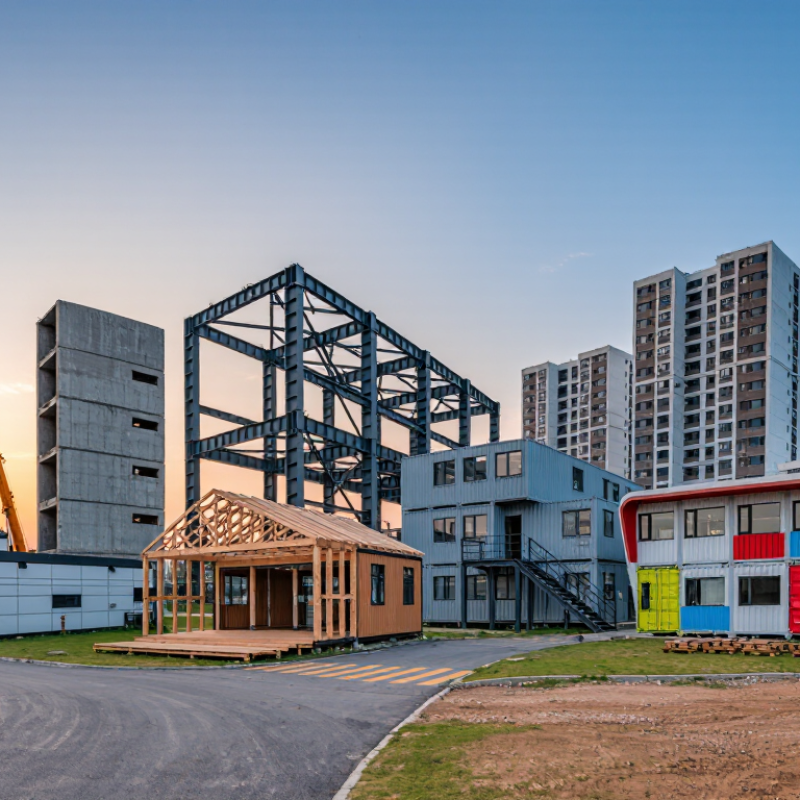
How Prefabricated Buildings Are Classified by Structure and Use
What Are the Top 10 Prefabricated Building Types?
Prefabricated buildings are best classified by structure and use, not appearance alone. The main structural groups include steel-frame modules, timber-panel systems, concrete precast units, volumetric modules, and hybrid assemblies. By use, the ten common types are modular homes, apartments, offices, schools, hospitals, hotels, worker housing, student residences, retail units, and temporary facilities. On site, a factory-built room may arrive with wiring, plumbing, flooring, and sealed windows already installed.
This classification reflects practical differences. A hospital module needs strict infection-control surfaces and medical service routes. A school panel system needs acoustic performance, daylight, and rapid installation during short holidays. Steel frames suit wider office spans, while timber panels can reduce weight and simplify transport.
The 2023 Global Status Report for Buildings and Construction reports that buildings consumed about 34% of global energy and produced 37% of energy and process-related emissions in 2022. Factory production may reduce waste, but transport distance and foundation work still matter.
20%–50%
Estimated schedule reduction from modular methods in suitable projects.
The McKinsey report Modular Construction: From Projects to Products estimates that modular methods can reduce schedules by 20% to 50% in suitable projects. That range is not universal. Poor coordination can erase the advantage.
In real projects, crane access, local codes, tolerances, and late design changes often decide performance. Classification helps early planning, yet boundaries remain imperfect. A temporary classroom can become permanent, and a “modular” apartment may combine several systems.
The Top Ten Prefabricated Building Types at a Glance
The top ten prefabricated building types at a glance include modular homes, panelized houses, apartment units, offices, classrooms, healthcare facilities, hotels, retail kiosks, warehouses, and agricultural buildings. Each type uses factory-made components, but their construction methods and site requirements differ. Modular homes arrive as three-dimensional sections, often with kitchens, wiring, and bathrooms partly installed. Panelized houses use flat wall or roof panels that crews assemble on prepared foundations.
Prefab apartments can accelerate urban housing projects where repeated layouts reduce design changes. Offices benefit from flexible modules, while classrooms need daylight, ventilation, acoustic control, and safe circulation. Healthcare units demand stricter hygiene planning and reliable utility connections. Hotel modules may include finished bedrooms, flooring, lighting, and compact bathrooms. Small retail kiosks are useful near transport hubs or temporary commercial areas.
Industrial and rural needs create another group. Warehouses use prefabricated frames, insulated panels, and wide loading openings. Agricultural buildings may include ventilated shelters, storage halls, or controlled-environment rooms. Practical experience shows that factory speed does not remove site risks. Transport limits, crane access, soil conditions, and local permits still matter. The categories also overlap. A modular clinic may resemble a small office, yet its performance requirements are much higher. That distinction is easy to miss. Design teams should verify fire resistance, moisture protection, energy use, and maintenance access before ordering components. Even a precise factory schedule can fail when the foundation is delayed.
Commercial and Institutional Prefabricated Buildings
Commercial and institutional prefabricated buildings include offices, schools, clinics, hotels, retail units, and community facilities. Their components are made in controlled factory conditions, then transported for assembly on site. This can shorten construction time and reduce weather-related delays. A modular classroom, for example, may arrive with walls, wiring, and interior finishes already installed. Yet transport access, crane space, and local site conditions still shape what is practical.
Design needs vary by use. A clinic may require cleanable surfaces, private consultation rooms, and carefully planned mechanical systems. An office often needs flexible partitions and reliable data connections. Schools benefit from durable floors, good acoustics, and daylight in shared spaces. Prefabrication does not make these details automatic. Poor coordination between factory drawings and site services can cause expensive changes, and that risk is easy to underestimate.
Tips: Confirm room layouts, utility connections, fire-safety requirements, and delivery routes before production begins. Ask how components will be inspected and protected during transport. Keep a little flexibility in the schedule; site work can still uncover surprises. Prefabricated buildings can be efficient, but they are not a shortcut around thoughtful design.
Industrial, Healthcare, Educational, and Emergency Prefabricated Buildings
What Are the Top 10 Prefabricated Building Types?
Industrial, Healthcare, Educational, and Emergency Prefabricated Buildings
Prefabrication now serves more than temporary site offices. The ten leading types include factories, warehouses, workshops, data centers, clinics, hospitals, laboratories, schools, training centers, and emergency shelters. Industrial buildings often use repeatable steel frames, insulated wall panels, and pretested service modules. These details reduce on-site congestion. McKinsey’s report, Modular construction: From projects to products, estimates that modular methods can shorten schedules by 20–50% and reduce costs by up to 20%. Results vary, however, especially when transport routes and foundations are poorly planned.
Healthcare projects demand stricter control. Factory-built patient rooms can arrive with installed plumbing, electrical systems, and hygienic surfaces. A misplaced outlet still creates trouble. The World Health Organization’s Global Report on Health Equity for Persons with Disabilities highlights how inaccessible facilities restrict care, so designers must consider ramps, circulation, ventilation, and infection-control zones early. Laboratories and clinics also need flexible layouts because medical equipment changes faster than many buildings.
Educational buildings benefit from repeatable classrooms, daylight planning, and quieter mechanical systems. Emergency shelters require rapid assembly, durable envelopes, and reliable sanitation. The 2023 Global Status Report for Buildings and Construction reports that buildings consumed 34% of global energy and produced 37% of energy- and process-related emissions in 2022. Prefabrication can improve material control, but it does not guarantee low emissions. Poor insulation, long-distance transport, or frequent replacement can erase the benefit. That uncomfortable gap deserves more attention.


' d='M0 0h21v15H0z'/%3E%3Cpath fill='url(%23b)' d='M0 0h21v5H0z'/%3E%3Cpath fill='url(%23c)' d='M0 5h21v5H0z'/%3E%3Cpath fill='url(%23d)' d='M0 10h21v5H0z'/%3E%3C/g%3E%3C/svg%3E)