Top Auto Labeling Machine Suppliers in China?
Choosing an Auto Labeling Machine supplier in China starts with the product, not a catalog photo. A round bottle, a flat carton, and a tapered jar each create different labeling demands. Line speed matters, but so do placement accuracy, changeover time, and adhesive performance. Ask whether the quoted output reflects your actual container and label dimensions. Small details matter. A sample run can reveal wrinkles, skewed labels, or awkward adjustments before installation. Those observations are more useful than broad claims about capacity.
This guide compares suppliers using practical signals: engineering support, machine configuration, documentation, spare parts, and commissioning assistance. It considers whether suppliers can explain sensor choices, conveyor layouts, and integration limits clearly. Look for test videos, detailed specifications, and references from comparable packaging lines. No supplier is ideal for every factory. A low initial price may leave questions about training or maintenance response. Not always. Even a capable machine can disappoint when product dimensions change or operators receive little guidance. Before requesting quotations, prepare container drawings, label samples, target throughput, and available floor space. Ask how acceptance tests are recorded and what support is available after shipment. These questions cannot guarantee a smooth project. They do make comparisons more grounded. The shortlist should reflect your line conditions, not serve as a universal ranking.
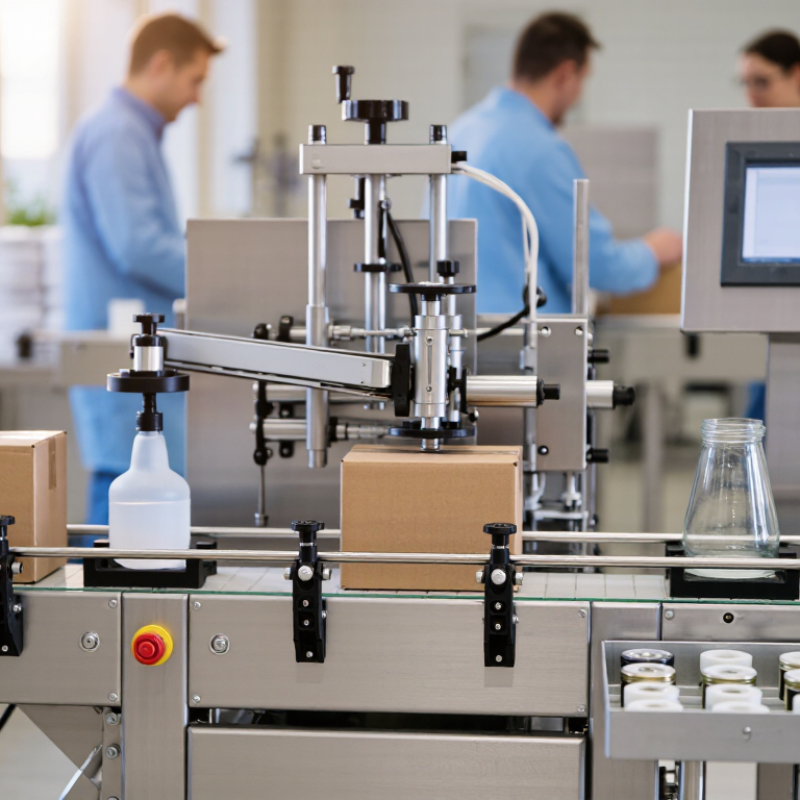
What Is an Automatic Labeling Machine?
An automatic labeling machine applies and positions labels on products, containers, or packages as they move through a production line. A typical system uses a conveyor, product sensors, a label roll, an applicator, and controls that coordinate timing. Depending on the design, it may wrap a label around a bottle, place one on a carton, or apply labels to the front and back. The goal is repeatable placement at production speed—not simply less manual work. A crooked label can still pass through if inspection is missing.
Automation is part of a broader manufacturing shift. The International Federation of Robotics’ World Robotics 2024 report recorded 541,302 industrial robot installations worldwide in 2023. That figure covers industrial robots, not labeling machines, but it shows the scale of investment in automated production. In practice, line performance depends on details: bottle spacing, label material, product shape, and sensor setup. Clear bottles can challenge detection. Damp containers may cause labels to lift. The word automatic can overpromise; changeovers and calibration still need trained attention. A machine that runs quickly on one carton size may struggle after a format change. The less obvious lesson is that reliable labeling starts with matching the applicator to the actual product and line.
How Automatic Labeling Machines Work
An automatic labeling machine turns a moving product into a timed sequence of detection, label feeding, and placement. A photoelectric sensor detects each bottle, carton, or pouch. An encoder tracks conveyor movement, helping the controller release a label at the correct moment. The roll unwinds, passes a tensioning path, and reaches a peel plate, where the backing bends away. A wipe-on belt or tamp pad presses the exposed label onto the product. Small timing errors matter. A few millimeters can leave a label crooked or covering important print.
The International Federation of Robotics’ World Robotics 2024 report recorded
4,281,585 industrial robots operating worldwide in 2023.
That figure covers industrial robots broadly, not labeling machines, but it shows the scale of factory automation. In practice, reliable labeling still depends on setup: operators match conveyor speed, sensor position, and label dimensions to the product. A camera or barcode reader can check placement and readability, while rejected items are diverted for inspection. This is not foolproof. Clear film, reflective packaging, or dusty sensors can confuse detection, so trial runs and routine cleaning remain essential. When comparing Chinese suppliers, ask for a live run using your actual container and label stock, then inspect samples at production speed.
Common Types of Automatic Labeling Machines
Automatic labeling machines are commonly classified by how they place labels and the shape of the package. Wrap-around labelers apply a label around cylindrical bottles, jars, or cans. A rotating roller helps keep the label smooth and aligned. They work well for round containers, but unstable bottles may need extra support.
Front-and-back labeling machines place one or two labels on flat or oval containers. They are often used for bottles with product information on the front and ingredients on the back. Top labelers apply labels to boxes, trays, or lids moving along a conveyor. Sensor position matters. Even a small shift can leave labels crooked.
Sleeve labeling systems fit a shrink sleeve around a container, then use a heat tunnel to form it closely to the surface. They can cover more of the package, though setup and heat control require care. Print-and-apply machines print variable details, such as batch codes, before placing the label on cartons or cases. Useful for changing data. In practice, package shape, line speed, and label material all affect machine choice. A sample run with actual containers can reveal problems that a specification sheet misses.
How to Evaluate Auto Labeling Machine Suppliers in China
Top Auto Labeling Machine Suppliers in China?
How to Evaluate Auto Labeling Machine Suppliers in China
Evaluate suppliers against your actual line conditions, not brochure speed. Ask for a live test using your containers, labels, and target production rate. Check placement accuracy, rejected units, changeover time, and whether operators can clear jams without special tools. Watch it run. Request a written acceptance test with measurable limits and recorded results.
The International Federation of Robotics’ World Robotics 2024 report counted 541,302 industrial robot installations worldwide in 2023. That figure is not specific to labeling machines, but it reflects the wider move toward automated production and makes integration capability worth checking.
Inspect the machine’s frame, sensor alignment, guards, and accessible adjustment points during a factory visit or live video walkthrough. Ask how the supplier handles spare parts, remote troubleshooting, training, and commissioning at your site. Get realistic response times in writing. Small details matter.
Compare quoted output with performance under your product’s real conditions, including bottle shape, label material, and line speed. Request references from customers using similar packaging, and verify them directly where possible. A polished demonstration can hide weak service coverage; even a careful evaluation cannot remove every risk. That is worth admitting.
Check documentation, electrical requirements, and maintenance schedules before comparing final prices.
Leading Auto Labeling Machine Suppliers in China
China’s leading auto labeling machine suppliers serve beverage, food, cosmetics, and pharmaceutical packaging lines. Their equipment may apply pressure-sensitive labels, sleeves, or wraparound labels to bottles, cartons, and jars. The right choice depends on container shape, label material, required speed, and changeover frequency. Small details matter. A label drifting a few millimeters can make a fast line look unreliable. Suppliers should therefore demonstrate accuracy using your actual containers and labels, not only sample stock.
Grand View Research’s 2023 report valued the global labeling equipment market at about US$3.1 billion and projected a 4.6% compound annual growth rate through 2030. That growth makes supplier claims easy to find, but harder to compare.
Ask for verified output rates, placement tolerances, and changeover times under clearly stated conditions. Request a factory acceptance test, spare-parts list, and operator training plan. Check whether local technicians can respond quickly. A machine may run smoothly during a brief demonstration, yet struggle with sticky labels or wet bottles during a full shift. I would also review maintenance records where available; this step is often overlooked. No single supplier fits every production line.