Top Maize Flour Mill Machine Manufacturers in China

Choosing reliable equipment requires more than comparing prices on a supplier website. A Maize Flour Mill Machine must handle local maize varieties, moisture changes, and demanding production schedules. In practice, operators examine flour fineness, cleaning efficiency, power consumption, and maintenance access. A polished brochure cannot show everything.

China has become an important manufacturing base for maize processing equipment. Its leading manufacturers offer compact mills for small businesses and integrated plants for commercial production. This guide introduces notable companies and explains how their equipment differs. It considers milling capacity, degermination performance, steel quality, automation, spare parts, and technical support. Factory experience matters here. A machine that performs well during a short demonstration may behave differently after months of dust exposure.

Details deserve attention. Ask for test reports using your own maize sample. Check whether contact parts use food-grade stainless steel. Confirm the warranty in writing, including response times and excluded components. Reliable manufacturers usually provide installation guidance, operating manuals, and commissioning support. Independent inspections can add confidence.

Still, no supplier is perfect. Published output may change with maize hardness, moisture, and desired flour quality. Some comparisons also rely on limited public information. That limitation should be acknowledged. Buyers should visit factories when possible, review customer references, and request a complete quotation. The strongest choice balances verified performance, lifecycle cost, safety, and service reliability—not simply the lowest purchase price. Experiences from different regions may also produce different results. Careful judgment remains essential.
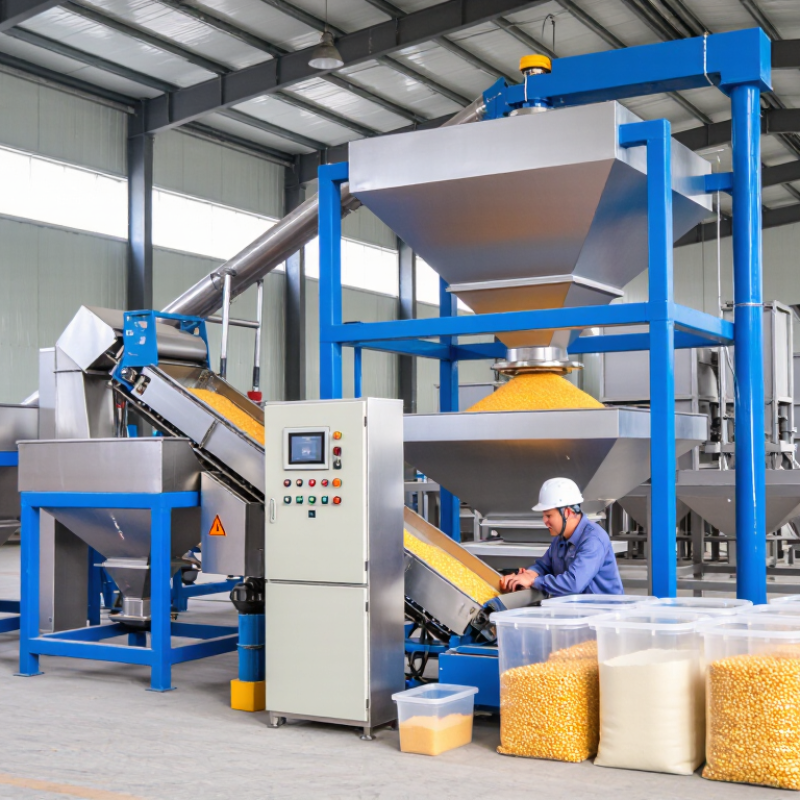
Top Maize Flour Mill Machine Manufacturers in China

What Defines a Leading Maize Flour Mill Machine Manufacturer in China

A leading maize flour mill machine manufacturer in China is defined by more than factory size or attractive pricing. It should show practical experience with maize cleaning, degermination, milling, sifting, and packaging. Reliable manufacturers explain each stage clearly. They match machine capacity with moisture levels, grain varieties, power supply, and workshop space. This prevents costly overdesign.

Technical credibility appears in measurable details. Ask for steel grades, motor efficiency, sieve specifications, bearing protection, and expected flour yield. A serious supplier can provide process diagrams, test records, installation guidance, and maintenance schedules. Factory testing with your maize sample is especially valuable. It reveals flour fineness, bran separation, heat buildup, and actual energy use. Paper specifications alone can be misleading.

Tips: Request a complete quotation, not only the main machine price. Check spare-part availability, response times, training, and warranty terms. Visit a working installation if possible. Look closely at dust control, electrical safety, and cleaning access. Small design details matter. A poorly placed inspection door can slow daily work. I would also question unusually high yield claims; real results change with grain quality and operator skill. Even experienced buyers can overlook local voltage, drainage, or future expansion needs. A dependable manufacturer welcomes these questions and records agreed performance standards before production.

Key Types of Maize Flour Milling Machines and Their Applications

Top Maize Flour Mill Machine Manufacturers in China

Maize flour milling machines vary by product texture, capacity, and processing conditions. Hammer mills use fast-moving hammers to produce fine flour for household cooking and small bakeries. Roller mills crush kernels between adjustable rollers, creating more consistent particles for commercial flour production.

Degerminating machines remove the germ and bran before grinding. This helps produce whiter flour with longer storage stability. Complete maize milling lines may combine cleaning, conditioning, degermination, milling, sifting, and packing equipment. Small workshops often choose compact mills, while larger processors need continuous systems with automated control.

In professional equipment evaluations, kernel moisture deserves careful attention. Very dry maize may create excessive dust and uneven flour. Overly moist kernels can block screens and reduce output. Ask manufacturers for test data using your maize variety, not only standard samples.

Inspect sieve access, food-contact materials, motor protection, and spare-part availability. A machine can look efficient on paper but perform poorly with local grain. That limitation is easy to overlook.

Tips: Define the required flour fineness before selecting the mill. Check hourly capacity under real operating conditions. Request noise, power, and dust-control details.

Keep cleaning access simple. Complicated designs may increase downtime. Compare trial results, maintenance training, warranty terms, and installation support.

A careful buyer should also question optimistic capacity figures. Reflection matters here; the cheapest machine may become expensive when screens, bearings, or energy costs rise.

How to Evaluate Chinese Maize Flour Mill Machine Manufacturers

Top Maize Flour Mill Machine Manufacturers in China

Choosing a reliable Chinese maize flour mill machine manufacturer requires more than comparing prices. Start by checking production experience, engineering staff, and completed installations. Ask for customer references from mills with similar maize quality and daily output. A supplier handling 20 tons daily may not suit a small rural plant.

Inspect the factory when possible. Look at welding quality, machine alignment, dust control, and food-contact materials. Stainless steel surfaces should be smooth and easy to clean. Request a live milling test using your maize. Check flour fineness, yield, temperature, and power consumption. Small details matter. Ask how the machine performs when maize moisture changes. This test often reveals more than a polished catalog.

Review technical documents carefully. The quotation should list motor power, sieve sizes, roller specifications, spare parts, and installation requirements. Confirm whether the stated capacity applies to cleaned maize or raw grain. That difference can affect planning. Reliable manufacturers explain maintenance intervals and provide clear drawings. They should also offer operator training, commissioning support, and a realistic warranty.

Do not judge authority by factory size alone. A smaller engineering team may provide better communication, but support capacity must be verified. Ask for response times and spare-part availability in writing. Check inspection records and applicable food-safety requirements. I would also compare three test reports, not just three prices. My own evaluation would still leave room for doubt: laboratory results may differ from field performance, especially during seasonal harvest changes. A careful buyer keeps a trial plan and measurable acceptance standards.

Top Maize Flour Mill Machine Manufacturers in China - How to Evaluate Chinese Maize Flour Mill Machine Manufacturers

Evaluation Dimension Relevant Data or Benchmark What to Verify Suggested Weight
Processing Capacity Common commercial maize flour lines are offered in approximate capacity classes of 5–10, 20–30, 50–100, and above 100 metric tons of maize input per 24 hours. Request a capacity test using maize with similar moisture, hardness, and impurity levels to the buyer’s raw material. 15%
Final Product Quality A suitable line should control particle size, bran separation, germ removal, color, moisture, and foreign-material content according to the buyer’s product specification. Ask for laboratory results, product samples, sieve analysis, and the guaranteed percentage of flour, grits, germ, and bran. 15%
Cleaning and Destoning A complete cleaning section may include scalpers, vibrating screens, aspirators, magnets, and destoners. The actual configuration depends on grain quality and local food-safety requirements. Confirm removal performance for stones, metal, dust, cobs, and other foreign materials before milling. 10%
Milling and Sifting System Roller mills, hammer mills, or combined systems can be used. Plansifter mesh selection and the number of milling passages strongly affect flour uniformity. Evaluate milling-pass design, sieve area, adjustment range, overheating control, and ease of screen replacement. 12%
Material and Food-Contact Safety Food-contact surfaces are commonly specified with stainless steel in areas exposed to the product; the exact grade and thickness must be stated in the contract. Check material certificates, weld quality, surface finish, inspection doors, seals, and the absence of inaccessible product-retention points. 10%
Energy Consumption Electricity use varies significantly with capacity, moisture conditioning, milling degree, aspiration, and automation. A quoted kWh-per-ton figure is meaningful only when test conditions are defined. Compare power ratings and measured energy consumption under the same throughput and product-quality conditions. 8%
Automation and Controls Basic lines may use manual controls, while larger systems commonly include PLC control, motor protection, level sensors, alarms, and interlocks. Confirm control-panel language, remote-support capability, spare input/output capacity, safety interlocks, and operator training. 8%
Dust Control and Workplace Safety Dust aspiration, enclosed conveying, grounding, guards, emergency stops, and suitable ventilation are important for hygiene and occupational safety. Review airflow calculations, filter specifications, noise data, explosion-risk controls, guarding, and emergency-stop locations. 8%
Factory and Quality Management A credible manufacturer should be able to provide a registered business profile, quality-control procedures, equipment drawings, inspection records, and traceable component documentation. Check factory ownership or authorization, production capability, quality certificates, inspection equipment, and recent installation references. 7%
Installation and Commissioning Installation requirements depend on line capacity, building height, foundation design, electrical supply, dust collection, and local regulations. Request layout drawings, foundation loads, utility requirements, installation scope, commissioning procedure, and acceptance-test criteria. 5%
Spare Parts and After-Sales Service Wear parts commonly include screens, bearings, belts, filters, hammers, rollers, seals, and electrical components. Availability and interchangeability affect downtime. Obtain a recommended spare-parts list, prices, delivery times, service response terms, and warranty exclusions. 7%
Commercial and Compliance Documentation The quotation should clearly identify capacity, scope of supply, electrical standards, Incoterms, payment milestones, delivery schedule, warranty, and performance guarantees. Use a signed technical specification and factory acceptance test to prevent differences between the sales quotation and delivered equipment. 5%
Total Suggested Evaluation Weight 100%

Note: Capacity classes and technical benchmarks are reference ranges only. Final performance should be confirmed through a documented test using the buyer’s maize variety and required flour specification.

Manufacturing Standards, Technology, and Quality Control

Top Maize Flour Mill Machine Manufacturers in China
Reliable maize flour mill manufacturing depends on more than production capacity. In factory audits, I look for documented designs, controlled welding, and traceable component records. Food-contact surfaces should use suitable stainless steel, with smooth corners that do not trap flour. Electrical panels need clear labeling, protective grounding, and practical access for maintenance. Manufacturers serving food processors should also understand HACCP principles and relevant food machinery requirements.
Modern maize milling lines often combine cleaning, conditioning, degermination, roller milling, and plansifting. A PLC system can monitor motor load, airflow, and operating alarms. However, automation is not a substitute for good process design. Operators still need simple controls and readable inspection points. Moisture affects grinding behavior, so test records should show how the machine handles different maize conditions. Small details matter.
Quality control should begin with incoming steel and purchased motors. Welds, shaft alignment, bearing temperature, and screen tension require recorded checks. Trial runs can measure flour fineness, yield, noise, and power consumption. Samples should be sealed and labeled by batch. Some workshops still rely too heavily on visual inspection. That is a weakness worth addressing. A stronger supplier investigates rejected parts, documents corrective action, and repeats testing before shipment. Factory acceptance tests should include cleaning access, emergency stops, and realistic operating loads. Testing only an empty machine is not enough.

After-Sales Support, Customization, and Export Services

Top Maize Flour Mill Machine Manufacturers in China

China’s leading maize flour mill manufacturers compete through service, not only machine capacity. FAOSTAT data show global maize production has exceeded 1.2 billion tonnes in recent years. This scale increases demand for reliable cleaning, degermination, milling, and packing systems. A capable supplier should provide installation guidance, operator training, troubleshooting videos, and spare-parts planning. Small details matter. A labeled motor terminal can prevent hours of downtime.

Customization begins with the maize itself. Moisture, hardness, impurity levels, and local flour preferences affect the process design. Experienced manufacturers may adjust roller sizes, sieve layouts, airflow, and automation levels. The OECD-FAO Agricultural Outlook 2024–2033 expects continued growth in maize use for food, feed, and industry. Therefore, flexible equipment can protect a mill from changing market needs. However, customization is not automatically beneficial. Poorly documented changes may make maintenance difficult later.

Export support should include electrical compatibility checks, wooden-case protection, multilingual manuals, customs documents, and remote commissioning. Strong suppliers also recommend critical spare parts before shipment, such as screens, bearings, belts, and sensors. After-sales response time deserves written confirmation.

“Fast support” is too vague.

A practical agreement should state contact channels, response targets, warranty scope, and technician availability. No service plan is perfect. Some buyers still underestimate local water quality, dust control, and operator skill, which can reduce performance despite good equipment.