

' d='M0 0h21v15H0z'/%3E%3Cpath fill='url(%23b)' d='M0 0h21v5H0z'/%3E%3Cpath fill='url(%23c)' d='M0 5h21v5H0z'/%3E%3Cpath fill='url(%23d)' d='M0 10h21v5H0z'/%3E%3C/g%3E%3C/svg%3E)
Top Miniature Ball Bearings Suppliers for Global Buyers
Miniature ball bearings support motion where every fraction of a millimeter matters. They appear in dental handpieces, camera lenses, robotics, medical instruments, and compact motors. Their small size does not reduce their engineering demands. Raceway finish, radial clearance, seal design, cage material, and lubricant compatibility can determine whether a bearing runs quietly or fails early.
Industry evidence confirms their growing importance. Grand View Research’s Ball Bearings Market Size, Share & Trends Analysis Report identifies automation, electric mobility, and precision equipment as major demand drivers. SKF’s Annual Report 2024 also highlights continued investment in electrification, industrial efficiency, and advanced rotating components. These reports describe broad market movement, not a guarantee for every supplier. That distinction matters. A low unit price may hide higher noise, inconsistent tolerances, or limited traceability.
Tedric A. Harris, a respected bearing engineer and author of Rolling Bearing Analysis, emphasized that “the rolling bearing is a precision machine element.” That principle remains practical today. The best miniature ball bearings suppliers should provide measurable quality, not attractive claims alone. Buyers should examine ISO 9001 certification, material documentation, dimensional inspection records, fatigue-life data, and realistic delivery performance.
Small parts. Serious consequences.
This guide compares leading suppliers for global buyers. It considers manufacturing capability, customization, application support, quality controls, and export reliability. Some supplier information may change over time. Verification is still necessary. A catalog can look impressive, yet the bearing must survive the actual load, speed, temperature, and contamination found in service.
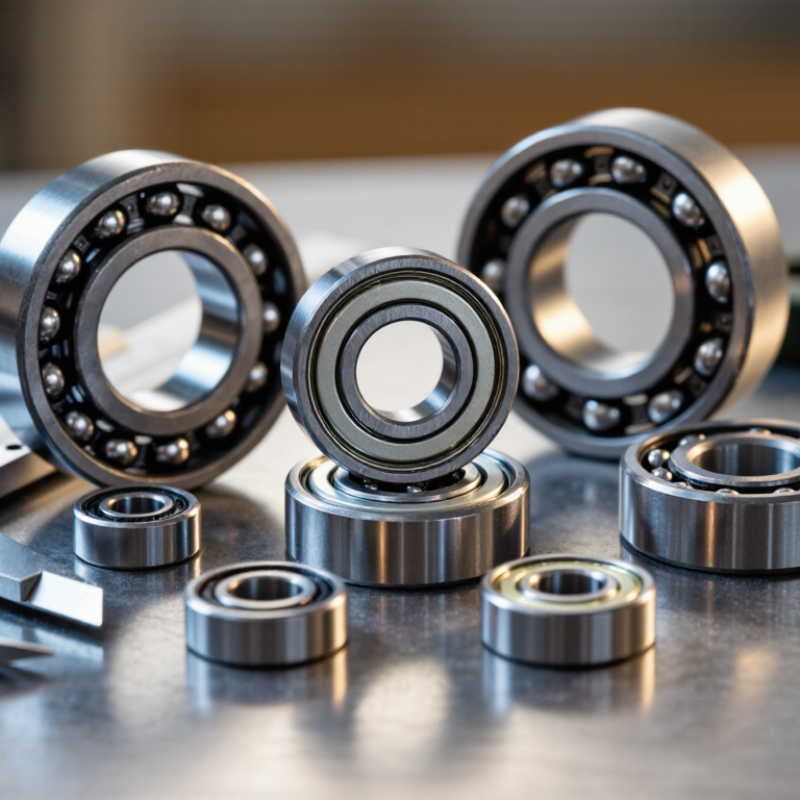
What Defines a Reliable Miniature Ball Bearing Supplier
A reliable miniature ball bearing supplier proves quality through repeatable details, not attractive promises. Ask for material certificates, dimensional inspection records, and clear tolerance data. Experienced suppliers should explain load ratings, rotational speed, lubrication, and operating temperature in practical terms. They should also provide samples before large orders. A bearing that feels smooth by hand may still fail under continuous vibration.
Traceability matters when bearings enter medical instruments, robotics, or compact motors. Each batch should connect to inspection results, production dates, and packaging information. Strong suppliers communicate realistic lead times and report problems early. Their technical team should answer specific questions without hiding behind general language. No supplier is flawless. I would still review complaints, replacement procedures, and response times. A polished website is not evidence. Sometimes, the quiet supplier with better records is the safer choice.
Tips: Request five sample bearings and measure bore, outside diameter, and noise. Check the seal condition after shipping. Ask how rejected batches are isolated. Compare test data with your actual speed and load, not ideal laboratory conditions. Keep written records of every promise. This feels slow, but it prevents expensive surprises. Suppliers may also recommend a cheaper specification, yet that advice deserves independent review before approval.
Top Miniature Ball Bearings Suppliers for Global Buyers - What Defines a Reliable Miniature Ball Bearing Supplier
| Evaluation Dimension | Reliable Supplier Benchmark | Typical Technical Evidence | Why It Matters to Global Buyers |
|---|---|---|---|
| Quality management | Documented quality processes operated under ISO 9001 principles | Current certificate, controlled work instructions, inspection records, and corrective-action reports | Improves process consistency and creates traceable responsibility for nonconforming products. |
| Dimensional accuracy | Manufacturing and inspection aligned with ISO 492 bearing tolerances; miniature products commonly supplied in P0/ABEC 1 or higher precision classes | Inspection reports for bore, outside diameter, width, radial runout, and clearance | Accurate dimensions support proper fit, low vibration, and predictable assembly performance. |
| Material control | Clearly specified bearing steel, stainless steel, ceramic, seal, and cage materials | Material certificates, heat-treatment records, hardness results, and corrosion-resistance data where applicable | Verified materials help prevent premature wear, corrosion, cracking, and inconsistent service life. |
| Product range | Metric and inch miniature bearings, typically covering bore sizes below 10 mm and selected flanged, shielded, sealed, and open designs | Complete product catalog, dimensional drawings, load ratings, speed limits, and tolerance tables | A broad, documented range reduces redesign work and simplifies multi-application sourcing. |
| Running performance | Controlled noise, vibration, friction torque, and rotational smoothness suitable for the stated application | Noise and vibration test results, torque data, speed testing, and application-specific samples | Low vibration and stable torque are critical in motors, encoders, medical devices, and precision instruments. |
| Load and speed data | Published dynamic load rating, static load rating, limiting speed, and recommended operating conditions | Technical datasheets based on recognized bearing calculation methods and validated test procedures | Reliable ratings help buyers select bearings safely without relying on unverified marketing claims. |
| Lubrication capability | Specified grease or oil, fill quantity, operating temperature range, and compatibility information | Safety data sheets, lubricant technical data, relubrication guidance, and temperature limits | Correct lubrication reduces friction, heat, noise, and the risk of early bearing failure. |
| Sealing and shielding options | Open, shielded, and contact-sealed configurations selected according to dust, moisture, speed, and friction requirements | Seal material details, ingress protection test information, and temperature compatibility data | The correct closure design protects internal components while maintaining acceptable speed and torque. |
| Traceability | Batch-level identification from raw material through production, inspection, packaging, and shipment | Lot numbers, inspection records, packing labels, and retention policy for quality documents | Traceability supports recalls, root-cause analysis, warranty handling, and regulated-market compliance. |
| Sampling and validation | Pre-production samples, first-article approval, and application testing before volume release | Sample inspection report, life-test results, fit-and-function records, and approved drawings | Early validation lowers the risk of costly redesigns, field failures, and production interruptions. |
| Production capacity | Capacity planning that supports repeat orders, forecast changes, and agreed lead times | Capacity statement, production schedule, bottleneck-control plan, and on-time delivery records | Stable capacity protects international supply chains from shortages and emergency freight costs. |
| Packaging and export readiness | Moisture-resistant, lot-controlled packaging with clear product identification and export documentation | Packing specifications, carton labels, commercial invoices, certificates of origin, and shipping records | Proper packaging helps prevent corrosion, contamination, misidentification, and customs delays. |
| Technical support | Responsive engineering support for bearing selection, preload, fit, lubrication, and operating conditions | Application calculation, tolerance recommendations, drawings, and documented response procedures | Expert support helps buyers achieve longer service life and avoid incorrect bearing selection. |
| Compliance and sustainability | Ability to provide applicable regulatory declarations and environmental management information | RoHS and REACH declarations where required, restricted-substance controls, and ISO 14001 information when applicable | Clear compliance documentation supports market access and responsible procurement programs. |
| After-sales response | Formal process for complaints, returns, failure analysis, corrective action, and replacement decisions | Claim response procedure, failure-analysis format, service contact, and corrective-action timeline | A structured response process limits downtime and provides accountability after delivery. |
Note: Actual bearing performance depends on design, load, speed, lubrication, installation, environment, and operating conditions. Buyers should verify all specifications through current technical documentation and application testing.
Related Posts
-
Ultimate Tips for Choosing Precision Ball Bearings Wisely?
-
5 Key Factors to Choose the Best Stainless Steel Bearings for Global Procurement
-
The Future of Engineering: Exploring the Innovations in Thin Section Bearings Technology
-

How to Choose Top Self Aligning Bearing Suppliers in China?
-

What Makes Ceramic Balls Essential for Modern Manufacturing
-

Exploring the Benefits and Applications of Self Aligning Bearings in Modern Machinery