Why Is a Turbo Intercooler Important?
A turbocharger compresses incoming air, helping an engine breathe more air for combustion. Compression also raises the air’s temperature. A Turbo Intercooler reduces that heat before the charge enters the engine, supporting denser intake air and more consistent performance. The effect is practical: after a hard pull, hot air can leave an engine feeling less responsive, especially when airflow through the cooling system is limited. That difference matters.
Intercoolers are not magic. Their results depend on design, airflow, ambient temperature, and the engine’s calibration. An undersized unit may struggle during repeated acceleration, while an unnecessarily large or poorly matched design can bring added weight, packaging challenges, or pressure loss. The phrase “colder is always better” sounds convincing, but it leaves out these trade-offs. Small details count.
This article explores how intercooling works, why charge temperature affects performance, and what drivers should consider when choosing or maintaining an intercooler. It also looks at real-world clues, such as heat soak, damaged fins, loose hoses, or unexpected boost changes. A single symptom rarely proves that the intercooler is at fault. Checks should be interpreted alongside the vehicle’s specifications and other system data. Not by itself. Understanding those limits helps separate useful upgrades from expensive guesses—and gives owners a clearer basis for discussing changes with a qualified technician.
What a Turbo Intercooler Is
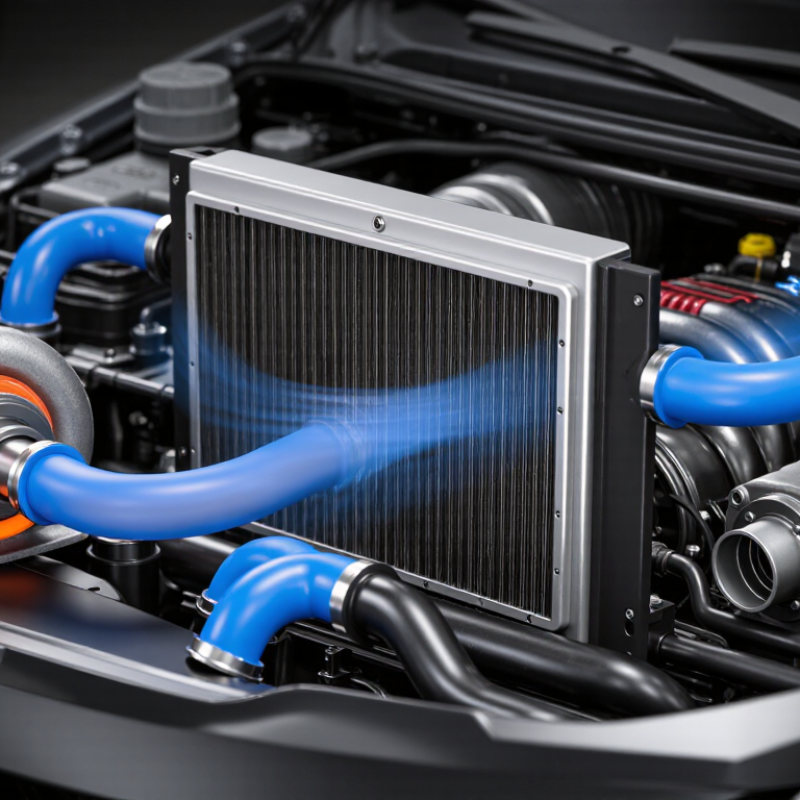
A turbo intercooler is a heat exchanger in a turbocharged engine’s air path. The turbo compresses incoming air, and compression raises its temperature. The intercooler removes some of that heat before the air reaches the engine’s intake manifold. Cooler air is denser, so the engine can receive more oxygen in a given volume. That can help support efficient combustion, though the intercooler does not create extra power by itself.
Many vehicles use an air-to-air intercooler, which passes heat from the compressed air to outside air flowing across its fins. Others use an air-to-liquid design, which circulates coolant through a separate heat exchanger. You may spot an air-to-air unit near the front of a vehicle, where it gets airflow. Its core contains narrow passages and thin fins. The name can be confusing: it cools intake air, not the engine’s coolant. Size, airflow, and operating conditions all affect how well it works.
Tips: Keep the intercooler’s exterior fins clear of leaves and packed dirt, and check for damaged hoses or loose connections. A boost leak can reduce performance even when the core looks clean. Avoid judging its condition by appearance alone; a technician can pressure-test the system when symptoms persist. I’d be cautious about assuming a larger unit is always better, since fit and airflow matter too.
How a Turbo Intercooler Cools Compressed Air
Why Is a Turbo Intercooler Important?
How a Turbo Intercooler Cools Compressed Air
A turbocharger compresses intake air, and compression raises its temperature. Hot air is less dense, so each cylinder may receive less oxygen than cooler air at the same pressure. An intercooler removes some of that heat before the air enters the engine. In a typical air-to-air setup, hot compressed air flows through narrow passages while outside air moves across the fins. Heat passes through the metal and into the passing airflow. Simple, but not effortless.
The temperature change depends on airflow, ambient conditions, and the intercooler’s design. A larger core is not automatically better: restrictive passages can create a pressure drop, and poor airflow can limit cooling. On a warm day, a car stopped in traffic may receive less cooling air than it does on an open road. The system’s condition matters, too. Damaged fins or loose connections can undermine performance. A temperature reading alone may not tell the whole story.
Tips: Check that the fins are clear of leaves and dirt, and inspect hoses for cracks or loose clamps. Compare intake temperatures under similar driving conditions; otherwise, the numbers can mislead. Don’t expect the intercooler to fix every heat-related issue. It helps manage charge-air temperature, but tuning, engine condition, and airflow also play a role.
How Cooler Air Improves Engine Performance
A turbocharger compresses intake air, and compression heats it. Hotter air is less dense, so each cylinder may receive less oxygen by volume. A charge-air intercooler removes some of that heat before the air enters the engine. Cooler, denser air can support more complete combustion and help maintain power under sustained load. The difference is tangible: think of a truck climbing a long grade, with the turbo working hard and engine-bay temperatures rising.
The temperature effect can be estimated using the ideal-gas relationship described in the ASHRAE Handbook—Fundamentals (2021). At equal pressure, cooling air from 50°C to 30°C raises its theoretical density by about 6.6%. That is not a guaranteed 6.6% power gain. Actual results depend on boost pressure, humidity, engine calibration, and pressure loss through the cooler. Small details matter.
An intercooler also helps reduce excessive intake temperatures, which can contribute to knock in spark-ignition engines or higher thermal stress. But colder is not automatically better. A restrictive core may offset some gains, and a damaged or blocked cooler can undermine performance. Not magic. When evaluating a setup, measure intake temperature before and after the cooler under repeatable load, rather than relying on a quick idle reading. Even that test has limits; road airflow and heat soak can change the result.
How an Intercooler Supports Engine Reliability
Why Is a Turbo Intercooler Important?
When a turbocharger compresses air, the air heats up. Hotter air is less dense, so each cylinder may receive less oxygen than expected. An intercooler removes some of that heat before the air reaches the engine. Cooler intake air can support steadier combustion and reduce the chance of excessive heat or knock under load. That matters.
Those conditions affect reliability. During a long uphill climb, for example, the turbo may work hard while engine-bay temperatures rise. A functioning intercooler helps control intake temperatures, easing one source of thermal stress. It does not prevent every failure, though. Poor fueling, damaged cooling components, or an unsuitable tune can still put an engine at risk. The intercooler is one part of a system, not a safety guarantee.
Its condition counts. Bent fins can restrict airflow, while loose couplers may let pressurized air escape. A driver might notice sluggish acceleration or unusually high intake temperatures, but symptoms alone do not identify the cause. Check for loose clamps, cracked hoses, blocked fins, and oily residue around connections. Still, I would avoid treating every small mark as proof of failure; some details need proper inspection. Regular checks help catch problems before a small leak becomes harder to diagnose.
Factors That Affect Intercooler Effectiveness
Intercooler effectiveness depends on more than core size. Core design, fin density, airflow, and coolant or ambient temperature all matter. A compact core may cool well on a highway, then struggle in slow traffic. SAE International’s charge-air-cooling technical literature treats heat rejection and pressure loss as related performance measures. Both deserve attention. A dense core can transfer more heat, but it may also restrict airflow or increase pressure drop.
A simple ideal-gas calculation, using the temperature-pressure relationship described in ASHRAE Handbook—Fundamentals, shows the scale: cooling air from 120°C to 60°C raises its density by about 15% at unchanged absolute pressure. This is a calculated comparison, not a guaranteed engine-power increase. Real results vary. Pressure loss, compressor efficiency, and engine calibration can reduce the benefit. A temperature probe before and after the core, plus pressure readings on both sides, gives a more useful assessment than surface temperature alone.
Installation details can quietly undermine performance. Long pipes add volume and create more places for heat to enter. A blocked grille, oily fins, or heat soaked by a nearby exhaust component can raise outlet temperatures. Weather matters, too: hot ambient air leaves less room for cooling. Even careful measurements have limits; sensor placement and changing road speed can skew the numbers. A clean core and short, well-sealed piping are practical starting points.
| Factor | How It Affects Effectiveness | What to Consider | Useful Indicator |
|---|---|---|---|
| Ambient air temperature | A cooler surrounding air temperature generally allows a front-mounted air-to-air intercooler to reject more heat. High ambient temperatures reduce the temperature difference available for cooling. | Compare performance under similar weather and operating conditions. | Ambient temperature and intake-air temperature after the intercooler |
| Core size and heat-transfer area | A larger core can provide more surface area for heat transfer, but size alone does not guarantee better cooling. Core design, airflow, and pressure drop also matter. | Choose a core suited to the engine’s airflow and available installation space. | Intake-air temperature change across the core |
| Core design and internal passages | Fin and passage geometry affects both heat transfer and resistance to airflow. A design that improves cooling may also create greater pressure loss. | Balance heat rejection against pressure drop rather than judging by appearance alone. | Temperature reduction and pressure drop at comparable airflow |
| Airflow across the core | Air-to-air intercoolers need a steady supply of outside air. Restricted ducting, blocked openings, or poor placement can limit heat rejection, especially at low road speeds. | Check the path from the vehicle’s air inlet through and out of the core. | Core airflow and intake-air temperatures at different vehicle speeds |
| Charge-air mass flow and boost | Compressing air raises its temperature. Higher mass flow can increase the heat the intercooler must remove, so cooling performance depends on the engine’s operating conditions. | Assess the intercooler with the engine under representative load, not only at idle. | Boost pressure, engine load, and charge-air temperatures before and after the core |
| Pressure drop | Resistance through the core and connecting pipes reduces pressure between the compressor outlet and the engine. Excessive pressure loss can reduce the pressure available to the engine. | Consider pressure loss together with temperature reduction at the same operating point. | Pressure measured before and after the intercooler |
| Heat soak | After prolonged load or when airflow is limited, the intercooler can absorb heat and become less able to cool incoming charge air until it sheds that heat. | Compare repeated acceleration or sustained-load runs, including recovery between runs. | Intake-air temperature over time during and after load |
| Installation and duct sealing | Gaps, leaks, or poorly directed ducting can let air bypass the core or allow charge air to escape, reducing the system’s overall effectiveness. | Inspect couplers, clamps, pipes, seals, and airflow guides. | Boost leaks, airflow bypass, and consistent temperature readings |
| Core cleanliness and condition | Debris on the external fins can obstruct cooling airflow. Internal deposits or damage may also restrict flow or impair heat transfer. | Keep the external surface clear and inspect for damage or restrictions. | Visible blockage, fin condition, and pressure or temperature changes |
| Cooling system capacity (air-to-water designs) | An air-to-water intercooler relies on coolant circulation and a separate heat exchanger. Coolant temperature, flow, and heat-exchanger airflow all influence cooling. | Check coolant circulation, pump operation, heat-exchanger airflow, and system bleeding. | Coolant temperature and charge-air temperature before and after the unit |