What Are the 7 Best Decanter Centrifuges?
Choosing the 7 best Decanter Centrifuges requires more than comparing catalog capacity or price. A unit must match the feed, operating hours, solids characteristics, and maintenance resources at the actual site. Wastewater treatment shows why reliable separation matters. UN-Water’s Progress on Wastewater Treatment – 2024 Update reports that 42% of household wastewater worldwide was not safely treated in 2022. The U.S. EPA’s 2024 Clean Watersheds Needs Survey estimated $630.1 billion in public wastewater and stormwater infrastructure needs over 20 years. These figures describe a broader treatment challenge, not centrifuge sales or performance.
For practical comparison, this guide looks at throughput, cake dryness, centrate clarity, power use, bowl and conveyor design, wear protection, controls, and service access. A machine that performs well on municipal sludge may not suit sticky food-processing solids or abrasive mineral slurry. Small details matter: feed consistency, polymer dose, and access to replace wear tiles can change daily operating results. They can change costs, too.
No single model wins every application. That is worth remembering. Published specifications are useful, but they cannot replace a properly controlled site trial using representative feed. The selections below are intended as a starting point, with attention to documented capabilities and real operating needs. Some comparisons remain imperfect because vendors report performance under different conditions. Buyers should verify claims with application-specific data before choosing equipment.
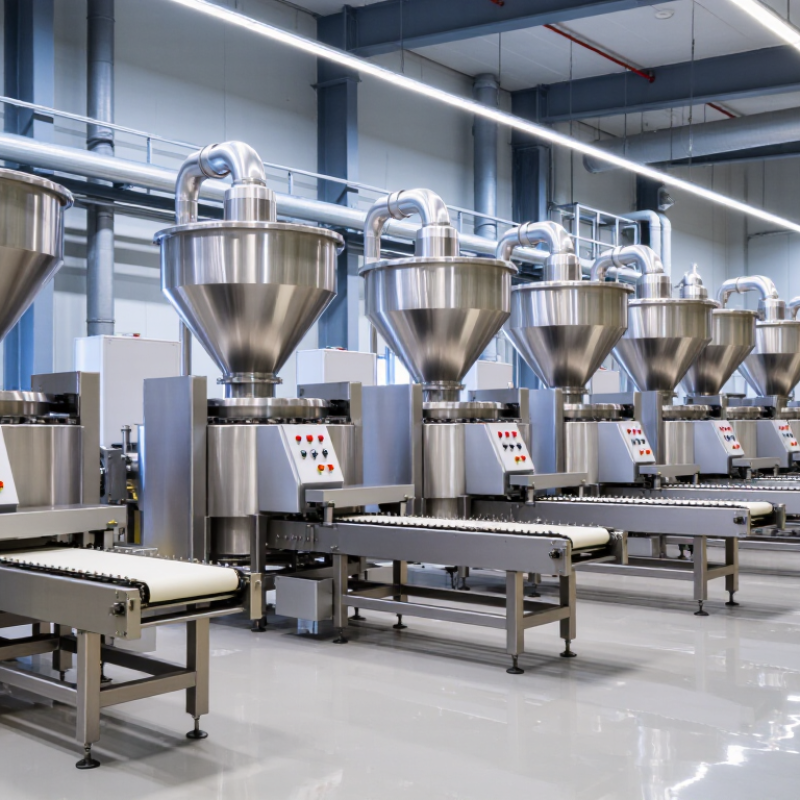
How Decanter Centrifuges Separate Solids from Liquids
A decanter centrifuge separates solids from liquid by spinning a mixture at high speed inside a horizontal bowl. Feed enters through an inlet and accelerates as it moves into the bowl. Centrifugal force pushes denser particles toward the bowl wall, while the liquid forms an inner layer. The difference is visible: solids collect along the steel surface, and clearer liquid moves toward an outlet.
A rotating screw conveyor turns at a slightly different speed from the bowl. It gently carries settled solids toward the conical discharge end, where they leave as a damp cake. Liquid exits separately, often passing over adjustable weirs. It takes tuning. Bowl speed, conveyor differential, feed rate, and the mixture’s particle size all affect separation. Small changes can alter how wet the cake is or how much fine material escapes with the liquid. Operators should check both outputs, not just the clarity of the liquid. A centrifuge can look efficient while producing solids that are still too wet for the next process. Results also depend on the material; sticky or very fine particles may need careful adjustment. There is no single setting that works for every feed.
Key Features to Compare Before Choosing a Decanter Centrifuge
What Are the 7 Best Decanter Centrifuges?
Key Features to Compare Before Choosing a Decanter Centrifuge
Compare machines against your actual feed, not a generic capacity figure. Feed solids, particle size, and flow can change separation results. Ask for test data using material similar to yours. Check solids capture and cake dryness together; improving one may affect the other. Small details matter. A broad bowl-speed range and adjustable differential speed can help operators respond to changing feed conditions. Also review torque limits, wear protection, cleaning access, noise, and the time needed for routine maintenance.
Energy use deserves a close look. The International Energy Agency’s 2011 report, Energy-Efficiency Policy Opportunities for Electric Motor-Driven Systems, estimates motor-driven systems use about 46% of global electricity. The U.S. Department of Energy’s 2014 sourcebook on motor and drive systems puts their share at roughly 70% of U.S. industrial electricity use. These figures cover motor systems broadly, not decanter centrifuges alone. Treat them as context, not a machine-performance guarantee. Request power consumption at expected operating conditions, and compare it with throughput and separation results. A brochure number alone is not enough. Consider operating hours, water use, and replacement parts, too. Still, estimates can miss real-world feed swings; trial results matter more than a tidy spreadsheet.
Decanter Centrifuge Bowl Speed vs. Centrifugal Force
Illustrative calculations for a 400 mm bowl diameter. Centrifugal force rises with the square of bowl speed, so compare required separation performance with each machine’s rated operating limits.
Values are calculated using RCF = 1.118 × 10⁻⁵ × radius (cm) × speed² (rpm). They are not product specifications; actual allowable speeds depend on the centrifuge design and manufacturer rating.
Seven Leading Decanter Centrifuges for Different Applications
Choosing among seven decanter centrifuge types starts with the feed, not a glossy capacity figure. A two-phase unit separates solids from liquid, making it useful for mineral suspensions and process slurries. A three-phase model separates solids, water, and lighter oil in one continuous operation. It needs stable feed conditions; fluctuating composition can reduce separation quality.
High-speed decanters target fine particles that need stronger centrifugal force. High-solids models use robust scrolls to handle thick, abrasive material, though wear can raise maintenance costs. Food-grade decanters prioritize smooth product-contact surfaces and cleanable designs for ingredients such as fruit pulp or starch. Details matter. A hard-to-clean joint can undermine an otherwise suitable machine.
For municipal or industrial sludge, dewatering decanters aim to produce drier cake and recover clarified liquid. Mobile, compact units suit temporary sites or facilities with limited floor space, but their throughput may be lower. I would compare feed tests, power use, polymer needs, and service access before choosing. One assumption can fail: a machine sized for average feed may struggle during peak solids loading. Pilot testing helps reveal that gap.
What Are the 7 Best Decanter Centrifuges? - Seven Leading Decanter Centrifuges for Different Applications
| Decanter Type | Best-Suited Application | Typical Bowl Diameter | Typical Feed Capacity | Separation Configuration | Key Selection Advantage | Important Consideration |
|---|---|---|---|---|---|---|
| Municipal Sludge Decanter | Thickening and dewatering municipal wastewater sludge | Approximately 350–1,000 mm | Approximately 10–150 m³/h | Two-phase solid–liquid separation | Designed for continuous sludge processing and adjustable cake dryness | Performance depends on sludge characteristics, polymer dosing, and the required cake solids. |
| Three-Phase Oil Decanter | Separating oil, water, and solids in food or industrial process streams | Approximately 250–700 mm | Approximately 1–50 m³/h | Three-phase liquid–liquid–solid separation | Separates two immiscible liquid phases and a solids phase in one continuous process | Suitable performance depends on the density difference, viscosity, and temperature of the feed. |
| Compact High-G Decanter | Space-limited installations and fine-particle separation | Approximately 200–450 mm | Approximately 1–25 m³/h | Usually two-phase solid–liquid separation | Compact footprint and high centrifugal acceleration can support separation of fine solids | Higher rotational speeds may increase wear and energy use; confirm the material and duty limits. |
| Large-Capacity Municipal Decanter | Large wastewater treatment plants with high sludge throughput | Approximately 600–1,000 mm | Approximately 50–200 m³/h | Two-phase solid–liquid separation | High processing capacity can reduce the number of machines needed for a given duty | Requires adequate floor space, lifting access, and provision for vibration and noise control. |
| Mining and Mineral Decanter | Mineral processing, tailings thickening, and process-water recovery | Approximately 350–900 mm | Approximately 10–150 m³/h | Two-phase solid–liquid separation | Can operate continuously on abrasive mineral slurries when configured with suitable wear protection | Abrasive feeds require careful selection of wear-resistant materials and maintenance intervals. |
| Food-Processing Decanter | Juice clarification, starch processing, and recovery of food-process solids | Approximately 250–700 mm | Approximately 1–60 m³/h | Two-phase or three-phase separation, depending on the process | Can provide continuous separation and may be supplied in a cleanable, hygienic design | Verify food-contact materials, clean-in-place requirements, and the applicable hygiene standards. |
| Hygienic Pharmaceutical Decanter | Bioprocessing and pharmaceutical solid–liquid separation | Approximately 150–500 mm | Approximately 0.5–20 m³/h | Typically two-phase solid–liquid separation | Can be specified with cleanable surfaces, containment, and controlled product-contact materials | Confirm validation, containment, cleaning, and regulatory requirements for the specific process. |
Capacity and bowl-diameter figures are indicative industry ranges, not guaranteed ratings. Actual selection depends on feed properties, separation targets, machine configuration, and operating conditions.
How the Top Models Compare in Performance and Operating Costs
Comparing seven leading decanter centrifuges means looking beyond advertised capacity. In field use, feed solids, particle size, and temperature can change throughput sharply. A fair comparison records flow rate, cake dryness, centrate clarity, and power draw under the same feed conditions. Small differences matter. A few percentage points in cake dryness can reduce hauling volume, while clearer centrate may lower downstream treatment demand.
Operating costs extend well beyond electricity. Bowl and conveyor wear, replacement parts, labor, polymer use, and downtime all affect the annual bill. Models with higher bowl speeds may improve separation, but can increase energy use and wear. Adjustable differential speed and torque control can help operators respond when feed conditions shift. Still, automation does not replace routine inspection.
The lowest purchase price is not always the economical choice. Compare service intervals and the cost of wear parts, then estimate expenses per ton processed. A realistic trial should run long enough to capture changing feed conditions, not just a clean sample on a good day. That assumption deserves a second look. No single machine wins every duty; a compact unit may suit limited space, while a heavier design may handle abrasive solids better. Check the numbers against your own operating data.
How to Select the Best Decanter Centrifuge for Your Process
The best decanter centrifuge is the one that fits your feed, not the one with the largest capacity rating. Start by measuring the slurry’s solids concentration, particle size, temperature, and flow variation. A feed that changes during a shift can behave very differently from a steady laboratory sample. Small details matter.
Define the separation target before comparing machines. Do you need a drier cake, clearer liquid, or higher throughput? These goals can compete. Bowl speed, differential speed, pond depth, and scroll design affect the balance, so request performance data using a representative sample. A short process trial is more useful than a confident sales estimate. I would not treat one test as a guarantee, either; real feeds drift.
Check construction materials against the slurry’s abrasiveness and chemistry, then assess access for cleaning and wear-part replacement. Ask for expected maintenance intervals, power demand, noise levels, and support arrangements. Consider the whole installation, including feed pumps, conveyors, and space for lifting equipment. A compact unit may look ideal on a drawing, yet leave little room for service. Compare total operating needs, not just purchase price, and record the assumptions behind each quote.