Why Choose a Pipe Swaging Machine?
Why Choose a Pipe Swaging Machine?
Pipe swaging is becoming more valuable as manufacturers pursue lighter, stronger, and cleaner tube assemblies. A Pipe Swaging Machine reduces tube diameter or forms ends through controlled cold working. It can create accurate transitions without welding an extra fitting.
Industry data supports this direction. Grand View Research valued the global metal forging market at approximately USD 83 billion in 2023. Its report also expects steady growth through 2030, driven by automotive, aerospace, energy, and industrial equipment demand. Swaging represents only one segment, however. Public reports rarely isolate pipe swaging, so buyers should treat broad market figures carefully.
Dr. Taylan Altan, a widely respected metal-forming specialist, stated, “Successful forming depends on material, tooling, and process control.” That principle remains practical on the factory floor. A properly selected machine can improve repeatability, reduce scrap, and shorten secondary machining. Picture a stainless-steel tube entering the die, receiving radial pressure, and leaving with a smooth, concentric end.
The benefits are not automatic. Tube grade, wall thickness, lubrication, die geometry, and stroke settings all influence results. A powerful machine can still produce wrinkling or cracks when setup data is incomplete. That is the uncomfortable part.
Manufacturers should compare force capacity, automation options, changeover time, safety features, and service support. They should also request sample trials using their actual tube material. The best choice is not always the fastest machine. It is the machine that delivers stable dimensions, documented performance, and reasonable operating costs over time.
What Is a Pipe Swaging Machine?
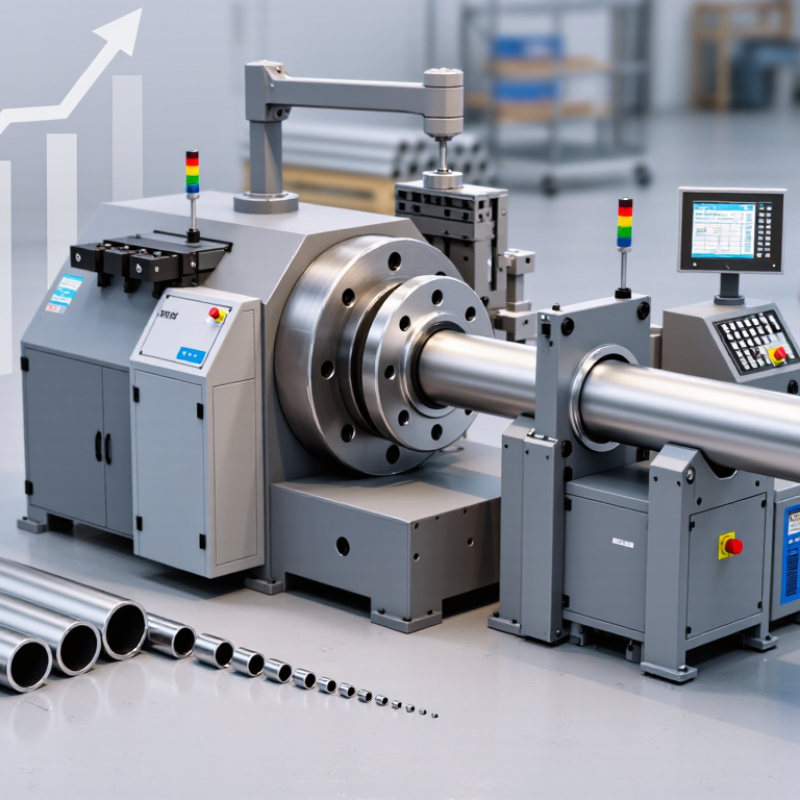
A pipe swaging machine is a workshop tool that changes a pipe’s end shape without removing much material. It usually uses a die, mandrel, or forming rollers to reduce, expand, or taper the tube. The operator places the pipe into the tooling, applies controlled force, and checks the finished profile with gauges. Some machines work by hand, while hydraulic or motorized versions provide steadier pressure for repeated work.
Simple idea. Careful setup.
Swaging can prepare a pipe for joining, improve alignment, or create a stepped end for another component. In practical workshop use, the correct die matters as much as the machine itself. A mismatched die may leave dents, uneven walls, or a loose connection. Clean tooling also helps prevent surface marks. Material type, outside diameter, wall thickness, and required reduction should be checked before forming. Excessive force can crack harder alloys, while insufficient pressure may produce an incomplete shape. This is where machine choice becomes important: a compact manual unit may suit occasional repairs, but production work often needs repeatable pressure and measurable stroke control. Even experienced operators can overlook springback, especially with resilient tubing. A second measurement is worthwhile. Pipe swaging is not a universal solution, either; very thin walls or complex profiles may require another forming method. Safety guards, stable clamping, and eye protection remain necessary because stored force can release suddenly.
How Does a Pipe Swaging Machine Work?
Why Choose a Pipe Swaging Machine?
How Does a Pipe Swaging Machine Work?
A pipe swaging machine reshapes a tube through controlled radial pressure. The operator places the pipe inside a forming die. Moving dies then close around its outer wall. They reduce the diameter, create a taper, or form a precise end profile. Some machines use rotary hammering, while others use hydraulic compression. The method depends on tube material, wall thickness, and required geometry.
The process usually begins with measuring the tube’s outside diameter and wall thickness. The machine must match the die profile closely. Poor alignment can create wrinkles, cracks, or uneven walls. During swaging, the metal flows instead of being cut away. This often preserves material and produces a clean, repeatable joint surface. Lubrication also matters. Too little lubricant increases heat and tool wear.
Quality checks should include diameter readings, wall-thickness checks, and visual inspection under proper lighting. The 2024 Deloitte Smart Manufacturing and Operations Survey found that 86% of manufacturing leaders expect smart manufacturing to become essential for competitiveness. This supports using sensors and digital records during forming. However, automation does not remove judgment. A hardened tube may spring back more than expected. That assumption can fail. Experienced technicians still adjust feed rates, die pressure, and lubrication after observing real production behavior. Industry forming guidance and applicable ASTM or ASME specifications should confirm the final dimensions.
Which Materials and Pipe Types Can It Process?
A pipe swaging machine reduces or reshapes a tube end through controlled radial pressure. Its real value depends on material, wall thickness, diameter, and required geometry. In practical shop trials, carbon steel, stainless steel, aluminium, copper, brass, and some titanium alloys can be processed with suitable dies. The tooling matters greatly. One die cannot safely handle every alloy.
Industry standards help define the working range. ASTM A269 covers seamless and welded austenitic stainless tubing, while ASTM B88 covers copper water tube. Mechanical tubing often follows ASTM A513 requirements.
These references guide inspection, but they do not guarantee successful swaging. The operator must check hardness, elongation, surface condition, and springback. Thin-wall aluminium may wrinkle. Hardened stainless steel may require gradual reduction. That difference is easy to underestimate.
The pipe shape also matters. Most machines handle round tubes, including straight sections and prepared ends. Some configurations process square or rectangular profiles, but custom tooling is usually necessary. The 2024 World Steel Association report recorded about 1.89 billion tonnes of crude steel production in 2023, showing the scale of steel applications. The International Aluminium Institute reported roughly 70 million tonnes of primary aluminium production in 2023. These figures suggest broad material availability, not universal machine compatibility. Actual testing remains essential. A perfect drawing can still produce a poor joint.
What Are the Main Benefits of Pipe Swaging?
Pipe swaging improves tube connections by forming the metal instead of removing it. A controlled die reduces a tube’s diameter or creates a precise end profile. This process can produce cleaner joints, smoother transitions, and fewer separate fittings. In practical production, that means fewer welds, less alignment work, and more consistent assembly.
The efficiency gain can be significant. The U.S. Department of Energy reports that compressed-air systems may lose 20–30% of their output through leaks and poor maintenance. A mechanical swaging process can avoid some pneumatic operations, although the machine still requires electrical energy. The World Steel Association reported global crude steel production of about 1.89 billion tonnes in 2023. That scale highlights why material efficiency matters across tube manufacturing. Swaging usually preserves more usable material than cutting and rejoining. It can also reduce surface damage around the connection. However, results depend on tube hardness, wall thickness, tooling, and operator setup. That assumption needs testing.
Tips: Check the tube’s actual hardness before selecting tooling. Measure finished diameters at several points, not just one. Use sample runs to verify springback and wall reduction. Keep records for each material batch. A small setup error can create a costly weak point. Not always obvious. Regular die inspection also helps prevent scratches, uneven forming, and premature tool wear. Industry standards should guide inspection methods and acceptance limits.
How to Select the Right Pipe Swaging Machine?
Choosing the right pipe swaging machine starts with the pipe, not the machine’s appearance. Identify the pipe material, outer diameter, wall thickness, and required reduction range. Stainless steel may need greater forming force than softer alloys. Confirm these values with production samples whenever possible. A catalog table alone can mislead.
Production volume also matters. A compact manual machine may suit maintenance work or small batches. Automated equipment is more practical for repeated operations and consistent output. Check the available tooling, adjustment method, cycle time, and motor capacity. In my experience, operators often focus on maximum force and overlook changeover time. That mistake becomes expensive during mixed-size production.
Tips: Ask for a forming test before purchase. Inspect the finished end for cracks, wrinkles, and uneven dimensions. Measure repeatability across several samples, not just one. Confirm guarding, emergency controls, noise levels, and operator access. Also ask about spare tooling, technical training, and service response. These details affect reliability more than polished specifications.
Leave room for honest uncertainty. Your first production estimate may be optimistic. Select a machine with moderate capacity beyond today’s needs, but avoid excessive power that raises cost and energy use. Review the machine’s footprint, foundation requirements, and electrical supply. A practical selection balances forming quality, safety, maintenance, and long-term operating cost.
Why Choose a Pipe Swaging Machine? How to Select the Right Pipe Swaging Machine?
The machine’s working range should cover the outside diameter of the pipe being processed. The chart below shows outside diameters for commonly used NPS pipe sizes, based on ASME B36.10M dimensions. When selecting a swaging machine, also verify wall thickness, pipe material, required reduction, tooling compatibility, and available forming force.
Reference: ASME B36.10M nominal pipe outside diameters. Values are shown in millimetres.


' d='M0 0h21v15H0z'/%3E%3Cpath fill='url(%23b)' d='M0 0h21v5H0z'/%3E%3Cpath fill='url(%23c)' d='M0 5h21v5H0z'/%3E%3Cpath fill='url(%23d)' d='M0 10h21v5H0z'/%3E%3C/g%3E%3C/svg%3E)