

' d='M0 0h21v15H0z'/%3E%3Cpath fill='url(%23b)' d='M0 0h21v5H0z'/%3E%3Cpath fill='url(%23c)' d='M0 5h21v5H0z'/%3E%3Cpath fill='url(%23d)' d='M0 10h21v5H0z'/%3E%3C/g%3E%3C/svg%3E)
What Are the Best Types of Sealed Bearings in 2026?
What are the best types of sealed bearings in 2026? The answer depends on load, speed, temperature, contamination, and maintenance access. A bearing beside a dusty conveyor needs different protection from one inside a quiet electric motor. This distinction matters.
Fortune Business Insights valued the global ball-bearing market at USD 20.08 billion in 2023 and projects continued growth through 2032. Grand View Research also identifies automation, electric vehicles, and industrial machinery as major demand drivers. These reports describe broad bearing markets, not sealed bearings alone. That limitation deserves attention.
Tedric A. Harris, a respected rolling-bearing analyst and author, stated, “Bearing life depends on load, speed, lubrication, and contamination control.” His point still guides practical selection. Deep-groove ball bearings suit general machinery. Angular-contact designs handle combined radial and axial forces. Tapered roller bearings support heavier loads. Stainless-steel versions resist moisture, while ceramic hybrids can reduce friction and electrical damage in selected applications.
The seal itself changes performance. Rubber contact seals offer stronger contamination protection but create more friction. Non-contact shields run cooler but may admit fine dust. Grease type matters, too. A low-temperature motor and a hot kiln cannot share the same specification safely.
This guide compares the leading sealed bearings for 2026. It considers service life, sealing effectiveness, noise, efficiency, cost, and real maintenance conditions. No shortlist is perfect. Even a premium bearing can fail when installation, alignment, or relubrication is neglected. The best choice is the one proven in the actual machine, not merely the one with the longest catalog rating.
How Sealed Bearings Work and Why They Matter in 2026
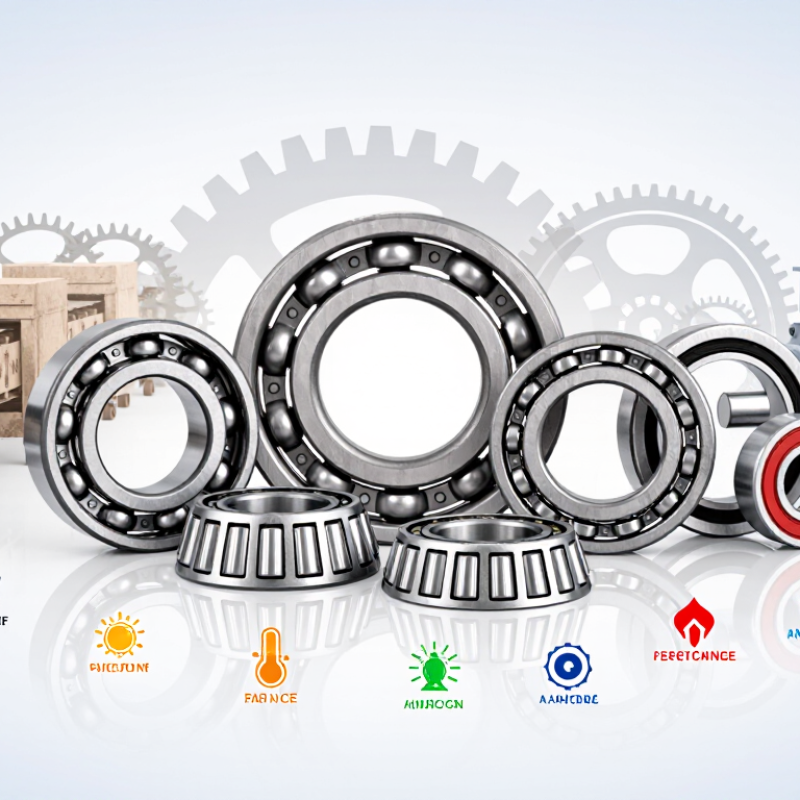
Sealed bearings keep rolling elements, raceways, and lubricant inside a protected space. Their seals block dust, water spray, and metal particles from entering. This simple barrier helps machines run smoothly with less maintenance. In 2026, that matters because equipment often operates continuously, remotely, and under tighter energy limits.
The best type depends on the load and movement. Deep-groove ball bearings suit electric motors, conveyors, and general rotating equipment. Angular-contact bearings handle combined radial and axial forces in precision systems. Tapered roller bearings support heavier loads, especially where shock and alignment problems occur. Stainless steel versions resist corrosion in damp environments. However, no seal is perfect. Heat, incorrect installation, and excessive pressure can still cause early failure. I have seen clean-looking bearings fail because their grease had degraded inside.
Tips: Match the seal material to temperature and exposure. Check speed ratings before choosing a bearing. Press only on the correct ring during installation. Avoid striking the seal. Keep spare bearings sealed in their original packaging. A small inspection habit helps: listen for rough noise, feel unusual vibration, and watch for rising housing temperature. Ceramic or hybrid designs may reduce friction, but they are not automatically the best choice. Cost, load, contamination, and service access should guide the decision. Performance claims still need field testing.
What Are the Best Types of Sealed Bearings in 2026? - How Sealed Bearings Work and Why They Matter in 2026
Sealed bearings use non-contact shields or contact seals to retain lubricant and limit the entry of dust, moisture, and other contaminants. The table below compares commonly used sealed bearing configurations by operating characteristics, design dimensions, and application suitability. Performance values are typical engineering ranges and vary by bearing size, internal clearance, seal design, lubricant, load, and operating conditions.
| Bearing Type | Typical Sealing Arrangement | Primary Load Direction | Typical Contact Angle | Representative Bore Range | Relative Radial Load Capacity | Relative Axial Load Capacity | Typical Speed Capability | Misalignment Capability | Best Applications in 2026 | Main Advantages | Important Limitations |
|---|---|---|---|---|---|---|---|---|---|---|---|
| Sealed Deep-Groove Ball Bearing | One or two integrated contact seals or non-contact shields; commonly pre-greased for life | Radial and moderate axial loads in both directions | Approximately 0° | Approximately 3–170 mm in common standard families | High; often the preferred option for compact, high-speed machinery | Low; shaft and housing alignment should be controlled | Electric motors, fans, pumps, conveyors, automation equipment, appliances, and light industrial machinery | Versatile, widely available, low friction, simple installation, and good cost-to-performance ratio | Limited ability to accommodate shaft deflection, heavy shock loads, or substantial axial loading | ||
| Sealed Angular-Contact Ball Bearing | Integrated seals or shields on one or both sides; may be supplied with factory-filled grease | Combined radial and axial loads, with axial capacity dependent on contact angle and arrangement | Commonly 15°, 25°, or 40° | Approximately 10–150 mm in common standard families | High to very high when preload, grease, and seal friction are correctly selected | Low; paired bearings require accurate alignment and mounting | Machine-tool spindles, robotics, precision actuators, compressors, pumps, and high-speed drive systems | Handles combined loads, supports axial positioning, and offers high rotational accuracy | More sensitive to mounting errors, preload, temperature, and incorrect axial-load direction | ||
| Sealed Cylindrical-Roller Bearing | Contact seals or shields used in selected designs; sealing can reduce maximum speed | High radial loads; some designs also accommodate limited axial displacement | Not defined as a ball-bearing contact angle | Approximately 10–160 mm in common standard families | Moderate to high; lower than comparable open bearings when seal friction is significant | Low to moderate, depending on internal design and clearance | Gearboxes, electric motors, heavy-duty pumps, industrial transmissions, and high-radial-load machinery | High radial stiffness, high radial load capacity, and good resistance to repeated radial loading | Usually unsuitable for substantial axial loads; roller-end guidance and lubrication quality are important | ||
| Sealed Tapered-Roller Bearing | Integrated elastomeric seal, often configured as a sealed single-row or pre-adjusted unit | Combined radial and axial loads | Approximately 10°–30° effective angle, depending on geometry | Approximately 15–170 mm in common standard families | Moderate; generally lower than deep-groove ball bearings of similar size | Low; accurate alignment and proper adjustment are required | Wheel hubs, geared drives, construction equipment, agricultural machinery, and heavily loaded rotating shafts | Excellent combined-load capability, high rigidity, and strong resistance to shock and impact loads | Higher friction and heat generation; preload or endplay must be correctly controlled | ||
| Sealed Spherical-Roller Bearing | Double contact seals or specialized sealed housing arrangements | Very high radial loads plus moderate axial loads in both directions | Not defined as a ball-bearing contact angle; spherical raceway geometry provides self-alignment | Approximately 20–180 mm in common standard families | Moderate to low, especially with contact seals and heavy loads | Mining conveyors, vibrating screens, fans, crushers, material-handling equipment, and misaligned shaft systems | Accommodates housing deflection and shaft misalignment while carrying heavy radial loads | Larger radial section, higher friction, and lower speed capability than many ball-bearing designs | |||
| Sealed Needle-Roller Bearing | Integrated lip seals or shielded ends; often supplied with factory-applied grease | High radial loads in a compact radial cross-section | Not defined as a ball-bearing contact angle | Approximately 5–150 mm in common standard families | Moderate to high, depending on roller length, lubrication, load, and seal friction | Low; raceway geometry and shaft hardness must be suitable | Automotive mechanisms, planetary transmissions, compact gearboxes, pumps, compressors, and space-constrained assemblies | High load capacity per unit of radial space and efficient use of compact housings | Requires accurate shaft geometry and hardness; poor alignment can produce edge stress and premature wear | ||
| Sealed Thrust Ball Bearing | Contact seals or shields used in selected low-to-moderate-speed designs | Axial load in one direction for single-direction designs; two directions for double-direction designs | Designed for axial contact rather than a conventional radial contact angle | Approximately 5–120 mm in common standard families | Low to moderate; sensitive to axial load, lubrication, and seal friction | Very low; shaft and housing faces should be perpendicular to the rotation axis | Turntables, screw mechanisms, low-speed indexing systems, vertical shafts, and axial positioning devices | Dedicated axial-load support with compact axial dimensions | Not suitable for significant radial loads or shaft misalignment; speed and lubrication limits are important |
Selection note: For most general-purpose equipment, sealed deep-groove ball bearings are the practical starting point. Choose angular-contact bearings for precision combined loads, tapered or spherical rollers for heavy-duty loading, cylindrical rollers for high radial stiffness, needle rollers where radial space is limited, and thrust ball bearings where axial load is the dominant requirement. Always verify dynamic load rating, static load rating, limiting speed, temperature range, seal friction, lubrication life, and environmental contamination before final selection.
Related Posts
-
Ultimate Checklist for Choosing the Right Sealed Bearings for Your Applications
-
How to Choose the Right Sealed Bearings for Your Industrial Applications
-
What Is a Ball Bearing and How Does It Work?
-
5 Essential Tips for Choosing the Best Sealed Bearings
-

Top Bearing Supplies to Buy in 2026 for Global Buyers?
-
Top 10 Ball Bearing Pullers for Easy Bearing Removal