Top 10 Types of Miniature Bearings for Buyers
Miniature bearings are easy to overlook until a small machine begins to vibrate, run hot, or lose accuracy. Their tiny dimensions do not make selection simple. Buyers must weigh load, speed, available space, lubrication, noise, and expected service life. A bearing that fits the shaft may still be the wrong choice.
Grand View Research estimated the global bearing market at USD 120.7 billion in 2023 and forecast growth through 2030. That figure covers bearings broadly, not miniature bearings alone. It signals a substantial market, but it cannot tell buyers which miniature design suits a dental handpiece, model motor, or compact sensor. The details matter. A shield can help keep dust out; a seal may better retain lubricant, but can add friction.
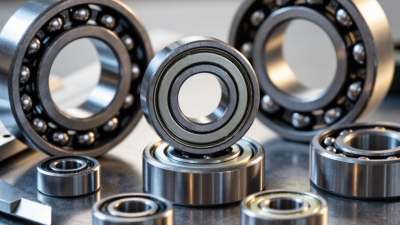
This guide compares ten common miniature-bearing types, including deep-groove ball, angular-contact, thrust, and ceramic options. It focuses on practical trade-offs, not just catalog labels. Check dimensions, tolerances, load ratings, and operating conditions against manufacturer data before ordering. One limitation deserves attention: no verifiable expert quotation was provided for this brief, so assigning a sentence to a named bearing specialist would risk false attribution. Technical advice should be traceable to its source.
What Defines a Miniature Bearing and How Is It Classified?
A miniature bearing is a compact rolling-element bearing built to support rotation where space, weight, or shaft size is limited. There is no single size boundary used across every industry. Buyers often use the term for bearings with small bores, sometimes under 10 millimeters, but the full outer diameter and width matter too. Check the drawing, not just the label. A bearing that looks tiny on a parts list may still be too wide for a close-fitting housing.
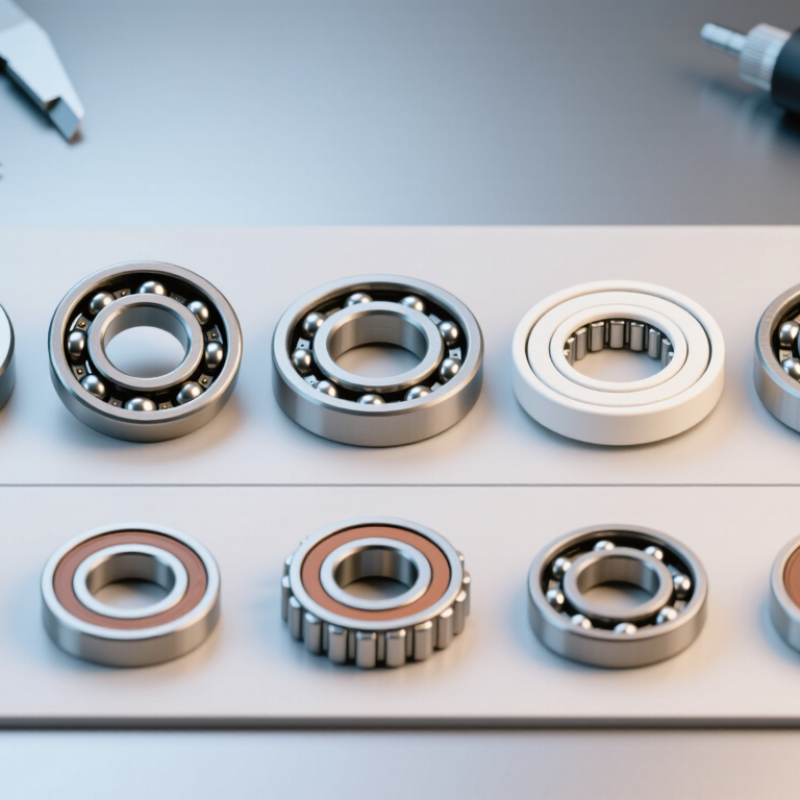
Classification starts with the rolling element. Ball bearings use small spheres and suit light-to-moderate loads with low friction. Roller designs use cylindrical or needle-shaped elements and can handle greater radial loads in a narrow space. Bearings may also be grouped by row count, load direction, and construction. Deep-groove types support radial loads and some axial load; thrust designs are intended mainly for axial force. These categories can overlap, so a product may fit several descriptions.
Buyers can also classify bearings as open, shielded, or sealed, based on how their sides are protected. Open designs need a clean, controlled environment. Shields help limit debris entry, while contact seals offer stronger protection but may add drag. Material is another useful distinction: steel is common, while ceramic elements or corrosion-resistant alloys may suit particular conditions. Match the classification to speed, load, temperature, lubrication, and contamination. Small details matter. Catalog labels are not always consistent, so confirm dimensions and operating limits before selecting a replacement.
The 10 Main Types of Miniature Bearings and Their Designs
Miniature bearings use different raceway and rolling-element designs to manage load, speed, alignment, and available space. Deep-groove ball bearings suit radial loads and light axial loads, making them common in small motors. Angular-contact ball bearings handle combined loads more effectively in one direction. Thrust ball bearings support axial loads, but not substantial radial force. Small differences matter.
Cylindrical roller bearings offer high radial-load capacity, while needle roller bearings fit tight spaces with their slender rollers. Tapered roller bearings manage combined loads and may need careful adjustment. Self-aligning ball bearings tolerate modest shaft misalignment. Spherical roller designs can also accommodate misalignment, though they are less common in miniature sizes. Plain bearings use sliding contact instead of rolling elements. Flanged bearings have an extended outer ring for easier positioning; this is a mounting design, not a separate rolling-element type.
Tips: Check shaft dimensions, load direction, speed, and lubrication before choosing. Look at the bearing’s actual load ratings, not size alone. A fingertip spin can reveal roughness, but it cannot replace measurement. A tidy selection chart may still miss vibration or heat in the real assembly. Test the fit under working conditions when possible.
How Materials, Seals, and Lubrication Affect Performance
For miniature bearings, material choice sets the starting point, not the final performance. Stainless steel resists moisture, while hardened bearing steel suits many compact, load-carrying assemblies. Ceramic rolling elements can reduce density and electrical conduction, but they do not make a bearing immune to poor alignment or impact. Small details matter. A thin moisture film near a shaft can undermine corrosion resistance over time.
Seals help block dust and splashed fluid, yet contact seals add drag and heat. Open or shielded designs may run more freely, but expose lubricant to contamination. A 2017 tribology study by Holmberg and Erdemir estimated that friction-related processes account for about 23% of global energy consumption. That broader figure is not a miniature-bearing test result, but it shows why friction deserves attention. Lubricant viscosity, fill quantity, speed, and operating temperature must work together. Too much grease can churn in a tiny cavity; too little may leave raceways poorly protected. ISO 281 provides a framework for calculating bearing rating life, though actual service conditions can differ. The trade-off is rarely tidy. A careful buyer should compare the bearing’s material, seal type, and lubricant against the real load, speed, temperature, and contamination around the application.
Top 10 Types of Miniature Bearings for Buyers — How Materials, Seals, and Lubrication Affect Performance
| Bearing Type | Typical Geometry or Example Size | Common Materials | Sealing and Lubrication | Performance Considerations | Typical Applications |
|---|---|---|---|---|---|
| Open deep-groove ball bearing | Radial design; example size: 3 × 10 × 4 mm (bore × outside diameter × width, size 623) | Through-hardened bearing steel is common; stainless steel is available where corrosion resistance is needed. | No integral closures. Requires a suitable lubricant supplied by the assembly or operating environment. | Low drag and easy relubrication, but exposed raceways are vulnerable to dust, moisture, and lubricant loss. | Precision instruments, small motors, and clean or protected mechanisms. |
| Shielded deep-groove ball bearing | Same basic geometry as an open radial bearing; example size: 4 × 9 × 2.5 mm (size 684) | Commonly bearing steel; stainless versions are also available. | Metal shields reduce entry of larger particles and help retain grease. They are not fluid-tight seals. | Usually offers less contact drag than a contact-sealed bearing, with less protection against fine dust or liquids. | Small fans, compact motors, and applications needing low maintenance in relatively clean conditions. |
| Contact-sealed deep-groove ball bearing | Radial design; example size: 5 × 13 × 4 mm (size 695) | Typically bearing steel or corrosion-resistant stainless steel, depending on the environment. | Elastomeric seals contact the inner ring. Often supplied with grease; relubrication options depend on the design. | Improved retention of lubricant and protection from contamination, with more friction and heat than a non-contact shield. | Small gearboxes, appliances, and mechanisms exposed to dust or occasional splashes. |
| Angular-contact ball bearing | Designed for combined radial and axial loads; example size: 8 × 14 × 3 mm (718/8 series) | Bearing steel is common; stainless steel and ceramic rolling-element options may be available. | Often supplied open or with closures selected for the assembly. Lubrication and mounting arrangement must suit its contact angle and speed. | Supports axial load in one direction; paired arrangements can support axial loads in both directions. Preload affects stiffness, heat, and service life. | Precision spindles, compact pumps, and miniature mechanisms with controlled axial loads. |
| Flanged miniature bearing | Radial bearing with an integral flange on the outer ring; bore and width are selected from the relevant series. | Commonly bearing steel; stainless-steel versions are available for humid or corrosive environments. | May be open, shielded, or sealed. Lubricant selection follows the closure, speed, temperature, and maintenance requirements. | The flange helps locate the bearing axially in a housing; it does not replace correct shaft and housing fits. | Small pulley assemblies, guide rollers, and thin housings where a separate locating shoulder is inconvenient. |
| Thin-section miniature bearing | Small cross-section relative to its bore; dimensions and load capacity vary substantially by series. | Bearing steel is widely used; stainless steel and other material options depend on the bearing design. | Open, shielded, and sealed versions are available. Limited internal space makes lubricant quantity and operating conditions important. | Saves radial or axial space, but should not be assumed to have the load capacity of a thicker bearing with the same bore. | Compact optical equipment, robotics, encoders, and space-constrained assemblies. |
| Stainless-steel miniature bearing | Available in several radial and other bearing designs; for example, a 3 mm bore is used in common miniature series. | Corrosion-resistant stainless bearing steels, such as martensitic grades, are used for rings and rolling elements. | Available open, shielded, or sealed. Use a lubricant compatible with the temperature, moisture, and process environment. | Offers better corrosion resistance than standard bearing steel, but load and fatigue performance depend on the specific grade and heat treatment. | Food-related equipment, medical instruments, and applications exposed to humidity or mild washdown. |
| Hybrid ceramic ball bearing | Uses ceramic balls with metal rings; available in selected miniature radial and precision designs. | Typically silicon-nitride balls with bearing-steel rings; stainless rings may be offered in some designs. | Closure and lubricant options vary. Some designs can operate with reduced lubrication, but suitability must be confirmed for the application. | Lower ball density and electrical insulation through the ceramic rolling elements can be useful; ring material and lubrication still govern many operating limits. | High-speed spindles, electrical equipment, and applications where reduced rolling-element mass is beneficial. |
| Full-ceramic bearing | Both rings and rolling elements are ceramic; miniature sizes and load ratings depend on the ceramic material and design. | Common choices include silicon nitride or zirconia; each has different strength, stiffness, and environmental characteristics. | Some designs are supplied without conventional grease, while others use application-specific lubrication. Confirm compatibility before operation. | Can provide strong corrosion resistance and electrical insulation, but may be more brittle and less tolerant of shock than steel bearings. | Chemically aggressive, electrically insulating, or lubricant-restricted environments when loads and speeds are suitable. |
| Miniature thrust ball bearing | Designed primarily for axial load; small-series dimensions vary. Example of a relatively small standard thrust size: 10 × 24 × 9 mm (51100 series). | Hardened bearing steel is common; corrosion-resistant materials may be available in selected designs. | Usually requires lubricant appropriate to speed, load, and orientation. Closures depend on the specific thrust-bearing construction. | Primarily supports axial loads and is generally not intended to carry significant radial load. Alignment and correct load direction matter. | Small screw mechanisms, rotary tables, and compact assemblies with predominantly axial loading. |
Buyer’s note: Example dimensions are nominal and identify representative standard sizes, not guaranteed availability for every material or closure. Actual speed, load, temperature, and service life depend on bearing accuracy, internal clearance or preload, fits, alignment, lubricant, contamination, and operating conditions. Confirm the bearing’s technical data before selection.
How to Match a Bearing Type to Its Load, Speed, and Environment
Top 10 Types of Miniature Bearings for Buyers
How to Match a Bearing Type to Its Load, Speed, and Environment
Choosing a miniature bearing starts with the actual load, not the smallest available bore. Deep-groove ball bearings suit radial loads and moderate axial loads. Angular-contact types handle combined loads, while thrust bearings manage axial force. Needle bearings fit tight radial spaces but need careful shaft support. Measure the load direction, shaft speed, and available space before choosing. A tiny bearing can still fail quickly when misaligned.
Speed ratings depend on lubrication, clearance, cage design, and heat removal. For load-life estimates, ISO 281:2007 defines basic rating life at 90% reliability under specified conditions; it is not a service-life guarantee. ISO 76:2006 addresses static load ratings and permanent deformation. These standards offer useful benchmarks, but real environments matter: dust near a sliding mechanism, washdown moisture, or dry operation can change material and seal requirements. A calculation may look reassuring and still miss the grit.
Tips: Match the bearing’s load rating to measured operating forces, then check speed and temperature limits in its technical data. Choose corrosion-resistant materials or seals for damp settings. For a high-speed motor, test heat and vibration under realistic duty cycles; a brief bench test is better than guessing, though it may not capture every start-stop condition.
Top 10 Types of Miniature Bearings for Buyers
How to match a bearing type to its load, speed, and environment
Scores are qualitative selection guidance on a 1–5 scale, not measured ratings: higher means greater typical suitability. Bearing capacity and speed depend on dimensions, fit, lubrication, precision, and operating conditions. Corrosion resistance depends strongly on materials, seals, and lubrication; verify the specific bearing’s data before selection.
What Buyers Should Check Before Selecting a Miniature Bearing
Top 10 Types of Miniature Bearings for Buyers
A miniature bearing may look simple, but a small mismatch can cause heat, noise, or early wear. Start with the actual load, not just the shaft diameter. Check radial and axial forces, operating speed, and whether loads change direction during use. Tiny shafts still need accurate measurements.
Confirm the bearing’s bore, outside diameter, and width against the housing and shaft drawings. Then review fit recommendations and mounting access. A tight press fit can reduce internal clearance; a loose fit may let the ring creep. This detail is easy to overlook. Also check the required running accuracy and noise level, especially in compact instruments or small motors.
Match the bearing material and protection to the working environment. Dust, moisture, cleaning fluids, and temperature can affect service life. Seals or shields may help, but they can also add friction or limit speed. Ask what lubricant is supplied and whether relubrication is practical. Request load, speed, clearance, and tolerance data from the supplier, then compare it with your operating conditions. A short trial under real loads can reveal vibration or temperature rise. Bench results are useful, but they do not tell the whole story. A little uncertainty remains until the assembly is tested.
Related Posts
-
Top Miniature Ball Bearings Suppliers for Global Buyers
-
The Evolution of Best Miniature Bearings in Advanced Technologies
-
How to Choose the Right Small Ball Bearings for Your Project
-
Top Benefits of Using Small Ball Bearings in Various Applications
-

How to Choose the Right Small Ball Bearings for Your Project Needs
-
Essential Tips for Choosing Miniature Bearings for Your Projects?