Why Are Ball Transfer Units Used in Material Handling?
In a busy factory, a heavy tote can arrive at a workstation with little room to turn. Ball transfer units help workers and equipment move loads sideways, rotate them, or guide them toward the next process. Their small, freely rotating balls support the load while reducing the effort needed to reposition it. A steel plate can glide across a transfer table; a crate can pivot toward a packing lane. The movement is simple, but it can make a work area more flexible.
These units are useful where products change direction often, such as assembly benches, inspection stations, and conveyor intersections. Their value depends on the details: load weight, ball spacing, surface condition, and the way the units are mounted. Dust, chips, or uneven loading can affect movement. That part is easy to underestimate. Ball transfer units do not replace good layout planning, suitable guarding, or routine checks; they work best as part of a considered handling system.
A credible expert quotation should come from a named specialist and a verifiable source. No source material was provided here, so inventing a name or attributing an unsupported quote would weaken trust. This outline can add a verified industry expert’s comment once one is available, then examine how unit design, installation, and maintenance shape real performance. The practical question is not merely whether a load can move, but whether it moves predictably, safely, and with less effort.
What Ball Transfer Units Are and How They Work
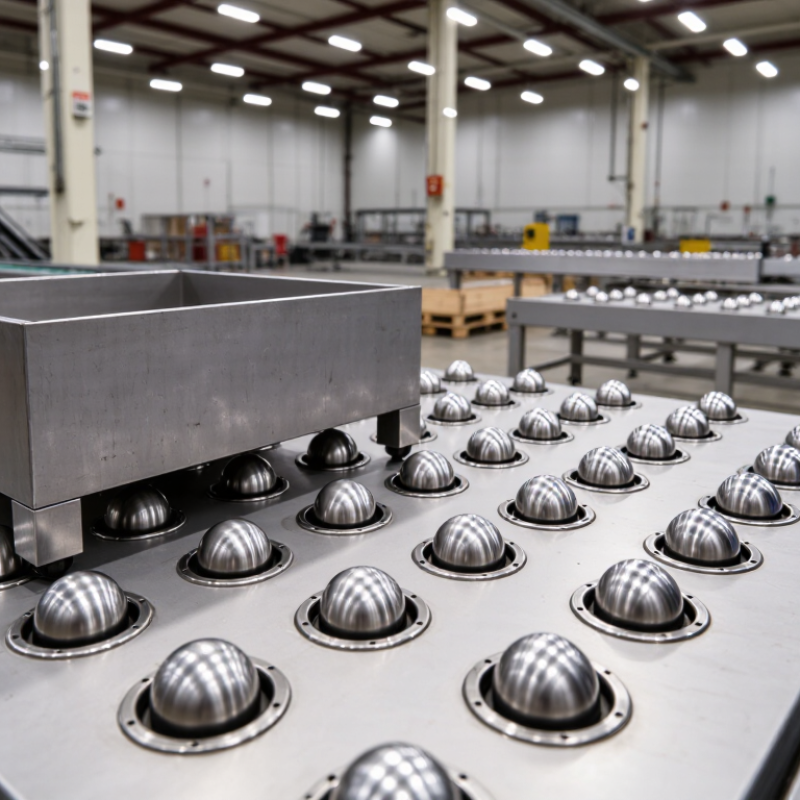
A ball transfer unit is a compact support device with a large exposed ball seated in a housing. Smaller internal balls support it and reduce friction as the main ball turns. Move a box across the unit, and the ball can roll in several directions instead of guiding the box along one fixed path. The housing carries the load and keeps the ball in place. Small parts matter.
In material handling, units are often set into a flat table or transfer plate. An operator can push a carton sideways, turn a metal panel, or reposition a fixture with less lifting. Multiple units share the load, but their spacing must suit the item’s size and weight. If units are too far apart, a flexible load may sag between them. In practice, a clean diagram can make setup look simpler than it is; uneven floors and dirt can affect movement. These units also do not replace powered equipment when long-distance movement or controlled speed is needed.
Tips: Check the load rating and ball spacing before installation. Keep the units clean, especially where dust or small debris collects. Test with the actual load; a light sample may not reveal sticking or uneven support.
How They Support Multi-Directional Load Movement
Why Are Ball Transfer Units Used in Material Handling?
How They Support Multi-Directional Load Movement
Ball transfer units support movement in several directions from a fixed point. A load can roll forward, sideways, or diagonally without being lifted. This helps workers reposition cartons, panels, and machine parts across a work surface. The units are often set into a transfer table or conveyor, with their exposed balls level with the surrounding surface.
Imagine turning a heavy crate at a packing station. With fixed rollers, the operator may need to pull it back, then guide it along a new track. Ball transfer units let the crate pivot more freely. Small parts matter. A unit that sits too high can catch a load’s edge; one set too low may not share its weight. Spacing and load capacity should match the object’s base and weight.
The movement is useful, but it is not effortless. Dirt, chips, or sticky residue can slow the balls and make direction changes uneven. Regular inspection helps keep the surface rolling smoothly. Operators should also consider whether a load has a flat, rigid base; soft packaging may sag between units. In practice, the setup may need adjustment after testing with real loads. A diagram alone will not reveal every snag.
Key Advantages in Material Handling Systems
Ball transfer units let a load move in several directions across a fixed surface. Their small steel balls support a crate or fixture, so an operator can turn and position it without lifting each time. Less pushing. More control. At a packing station, this can simplify alignment between worktables, inspection points, and conveyors. It can also reduce the need for powered transfers in short, low-speed moves. The U.S. Bureau of Labor Statistics reported a total recordable case rate of 4.4 per 100 full-time-equivalent workers in transportation and warehousing for 2023. This figure provides industry context; it does not prove that ball units prevent injuries.
Their practical advantage is flexibility. A compact transfer table can be built into an existing line, and individual units can be replaced if damaged. That can be useful where products change often or floor space is tight. But performance depends on the load. Small contact points may mark soft packaging, while dust or chips can impede the balls. Uneven loading can also make movement unpredictable. A sensible installation checks unit spacing, load capacity, surface height, and cleaning access before use. Operators should test the actual product, not just an empty crate. This step is easy to skip. BLS data cited above comes from its Employer-Reported Workplace Injuries and Illnesses report; the equipment choice still needs site-specific assessment.
Ball transfer units support movement in multiple directions across a level surface, making it easier to reposition, turn, and align loads at workstations or transfer points. The chart shows whether each listed capability is typically supported, not a performance rating. Actual suitability depends on the load and system design.
Common Applications Across Industries
Ball transfer units help workers move loads sideways, rotate them, or change direction without lifting. In warehouses, they are often fitted into transfer tables beside conveyor lines. A carton can roll toward a packing station, while an operator turns it to scan a label or reach a handle. Small pauses matter. The right layout can reduce awkward handling, though poorly aligned units may make cartons drift or snag.
Automotive and appliance plants use ball transfer surfaces to position heavy components during assembly. Workers can nudge a metal panel into place rather than drag it across a fixed table. In metal fabrication shops, units may support sheet material as it moves between cutting or inspection stations.
Packaging operations also use them to redirect cases between conveyors. For delicate or uneven loads, designers need to check ball spacing and rated capacity; a narrow base may rock instead of glide. Food-processing settings require extra attention to cleanability, since debris can collect around moving parts.
Not every application benefits. A few units may help, but the floor layout, load shape, and maintenance routine decide whether movement stays smooth.
Factors That Guide Their Selection and Placement
Selection starts with the load, not the catalog rating. Check the item’s weight, base shape, and center of gravity. A 120-kilogram tote does not always place 30 kilograms on each of four units. Off-center loads and uneven frames shift pressure. Allow a safety margin, then confirm each unit’s rated capacity and ball spacing. Small bases may need closer spacing to prevent rocking. Balls should sit slightly above the surrounding surface, letting the load move without scraping. Keep units away from debris-heavy zones; dust and scraps can make movement jerky.
Placement depends on the task. Put units at transfer points, turns, and inspection stations, where workers need controlled repositioning. Align them with the direction of travel, and leave enough room for hands and feet. The U.S. Bureau of Labor Statistics recorded 2.6 million nonfatal workplace injuries and illnesses in private industry in 2023. That figure is not specific to ball transfer units, but it reinforces the need to assess handling hazards around each station. MHI’s 2024 Annual Industry Report found 55% of respondents planned to increase supply-chain technology investment. Automation plans still need practical trials: test a loaded item on the actual floor, then check for wobble, drift, and pinch points. Drawings miss things. A short trial may expose a layout that looks right but feels awkward.
Why Are Ball Transfer Units Used in Material Handling? — Factors That Guide Their Selection and Placement
| Factor | Why Ball Transfer Units Are Used | Selection Guidance | Placement Guidance |
|---|---|---|---|
| Movement in multiple directions | Ball transfer units let a supported load move in different directions, making them useful at workstations, assembly areas, and transfer points where items need to be repositioned. | Choose units designed for the load’s weight, base, and operating conditions. Confirm the rated capacity and operating limits in the product specifications. | Arrange units across the transfer surface so the load remains supported while moving through the required directions. |
| Load weight and distribution | Each unit carries part of the load. Uneven weight distribution can place more force on some units than others. | Estimate the maximum working load and account for the load’s center of gravity, uneven loading, and any expected handling impact. Do not assume the load will be shared equally across every installed unit. | Provide support beneath the load’s expected contact area, including areas near its center of gravity. Verify the layout for off-center or changing loads. |
| Load footprint and stability | The size and shape of the load’s underside affect how many units contact it and whether it can remain stable during movement. | Check the contact surface for flatness, rigidity, and sufficient bearing area. Consider whether the load has feet, runners, or an uneven underside. | Set spacing so the smallest load footprint is supported at the same time by multiple units. Treat spacing rules as a starting point and validate them with the actual load. |
| Transfer direction and layout | Different arrangements can support straight transfers, changes in direction, or positioning between adjoining work areas. | Select a layout that suits the required flow, transfer angle, and handling method. Consider how loads enter and leave the surface. | Place units across the transfer zone and near transition points so the load does not lose support between surfaces. Align adjoining equipment to reduce gaps and snag points. |
| Surface and load contact | Rolling performance depends on contact between the balls and the load’s underside. Rough, soft, or irregular surfaces can increase resistance or interrupt movement. | Match the unit design and ball material to the load surface and operating environment. Check for compatibility where corrosion, abrasion, or product marking is a concern. | Use a consistent, adequately supported mounting surface. Keep the load’s contact area clear of protrusions that could catch between units. |
| Dirt, debris, and moisture | Contamination can obstruct ball rotation and reduce smooth movement. Some environments also require materials or construction suited to moisture or frequent cleaning. | Consider dust, chips, liquids, and cleaning practices when choosing unit construction and maintenance access. Check the manufacturer’s environmental guidance. | Position units where they can be inspected and cleaned. Establish a suitable inspection and cleaning routine for the operating environment. |
| Operating speed and impact | Loads that are pushed quickly, stopped abruptly, or placed down forcefully can create forces beyond their static weight. | Account for handling method and possible impact when checking load capacity. Use controlled transfer practices and confirm any dynamic-load limits. | Provide stable support at loading and stopping areas. Avoid layouts that encourage loads to drop, strike, or roll uncontrolled onto the units. |
| Maintenance and service access | Inspection and cleaning help maintain smooth operation and identify wear, damage, or units that no longer rotate freely. | Choose a design that can be inspected and replaced within the available maintenance process. Follow the specified service instructions. | Allow access to units for inspection and replacement, especially in high-use areas and locations exposed to contamination. |
Related Posts
-
The Ultimate Guide to Ball Transfer Units in 2025 Exploring Top Choices
-
2026 Best Ball Transfer Units for Global Buyers?
-
What Are the Top Ball Transfer Unit Types in 2026?
-
Future Trends in Self Aligning Bearing Technology for 2025 and How to Leverage Them
-
How to Choose the Right Flanged Bearings for Your Application
-

The Hidden Role of Ball Bearings in Everyday Technology