What Is a Ceramic Bearing and What Types Are Available?
A ceramic bearing uses ceramic rolling elements, raceways, or both to support rotating loads. The term covers several designs, not one universal product. Hybrid bearings pair ceramic balls with steel rings, while full-ceramic bearings use ceramic components throughout. Common materials include silicon nitride, zirconia, and alumina, each with different strengths and limitations.
Material data helps explain the choice. CeramTec’s technical data place silicon nitride density near 3.2 g/cm³, compared with roughly 7.8 g/cm³ for bearing steel. Lower mass can reduce centrifugal forces at high speeds. That matters. Ceramic rolling elements also resist electrical current and corrosion in many operating environments. ISO 26602 specifies silicon nitride materials for rolling bearings, while SKF’s bearing guidance describes hybrid designs and their application considerations. These sources offer useful engineering context, but actual performance depends on load, lubrication, fit, and temperature. Ceramic is not automatically better. It may cost more, and brittle fracture remains a design concern under impact or poor installation. This guide explains what ceramic bearings are, compares available types and materials, and outlines where each option may fit. The practical question is not simply whether ceramic is superior, but whether its properties solve a specific operating problem.
Ceramic Bearings Defined: Structure, Components, and Operating Principle
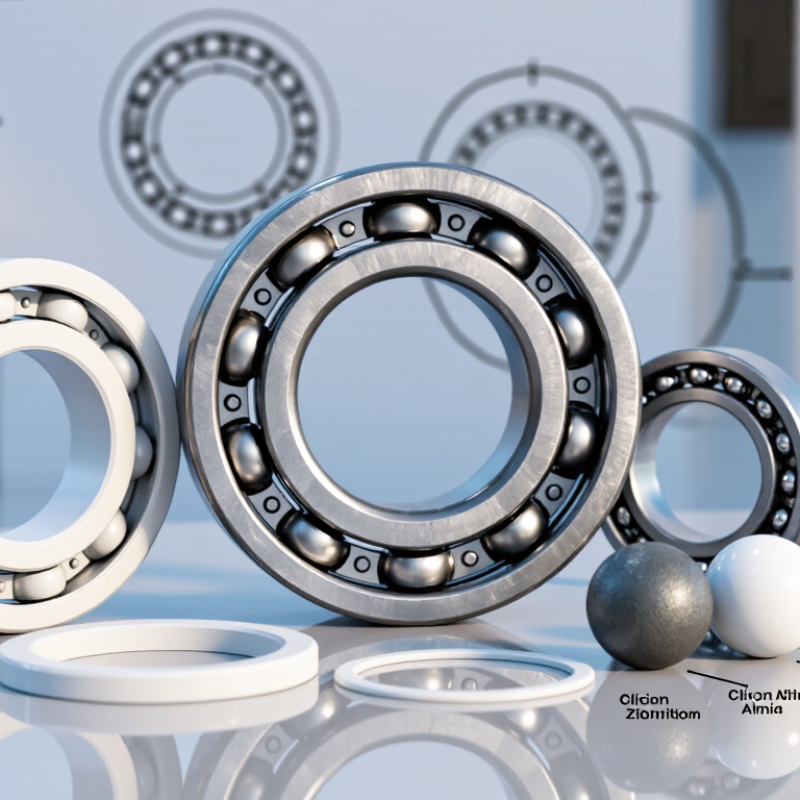
A ceramic bearing uses ceramic rolling elements, usually silicon nitride, to carry load between inner and outer rings. In a hybrid design, the balls are ceramic and the rings are steel; a full-ceramic design uses ceramic for both. A cage keeps the balls spaced as they roll, while lubricant forms a thin film at the contact points. The basic action is simple. Rotation turns sliding contact into rolling contact, reducing friction and wear when the bearing is correctly aligned and lubricated.
ASM International materials data place dense silicon nitride near 3.2 g/cm³, compared with about 7.8 g/cm³ for bearing steel. Lower mass can reduce centrifugal forces at high speed, but it does not make every ceramic bearing suitable for every load. ISO 26602:2009 specifies requirements for silicon nitride rolling elements used in bearings. Their hardness and electrical insulation can be useful in demanding equipment, yet ceramic remains vulnerable to impact and edge damage. That trade-off is easy to miss. During inspection, small chips or unusual noise should not be dismissed just because the material is hard. A ceramic bearing is not maintenance-free; fit, contamination, and lubrication still matter.
Ceramic Bearing Materials: Typical Density
Hybrid ceramic bearings typically pair ceramic rolling elements with steel rings, while full-ceramic bearings use ceramic for both. Silicon nitride is a common rolling-element material; zirconia and silicon carbide are also used. Lower density can reduce rolling-element mass. Values shown are typical material densities and vary by grade.
Bearing Materials Compared: Si₃N₄ at ~3.2 g/cm³ vs Steel at ~7.8 g/cm³
Silicon nitride (Si₃N₄) has a density near 3.2 g/cm³, compared with roughly 7.8 g/cm³ for bearing steel. ASM Handbook, Volume 2, reports values in this range for these material classes. At equal volume, a ceramic ball weighs about 59% less. A useful difference. But density alone cannot predict a complete bearing’s weight. Hybrid bearings use ceramic balls with steel rings; full-ceramic bearings use ceramic rings and rolling elements. ISO 26602:2009 specifies requirements for silicon nitride ceramic bearing balls.
Lower ball mass can reduce centrifugal forces as balls spin at high speed. That may help limit stress and heat, particularly in applications with rapid acceleration. Yet it does not guarantee lower friction or longer service life. Lubrication, raceway finish, internal clearance, and operating temperature still matter. Ceramic is also harder and more brittle than steel, so impact or poor installation deserves attention. This is where tidy material comparisons become less tidy. A hybrid bearing may retain substantial steel mass in its rings, while a full-ceramic unit changes the whole design. Engineers should compare the actual bearing’s dimensions, speed rating, load capacity, and test conditions—not density figures alone.
Three Main Designs: Full-Ceramic, Hybrid, and Ceramic-Coated Bearings
What Is a Ceramic Bearing and What Types Are Available?
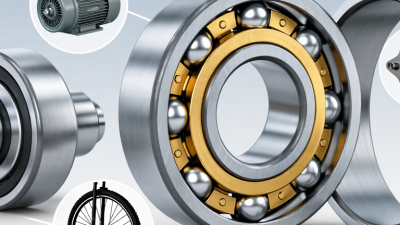
A ceramic bearing uses ceramic material in its rolling elements, races, or both. Full-ceramic designs use ceramic for both rings and rolling elements. They resist corrosion and are electrically insulating, but can be brittle under impact. Hybrid bearings pair ceramic balls, often silicon nitride, with steel rings. They are lighter than all-steel designs and can suit high-speed applications. Ceramic-coated bearings keep a metal base, with a thin ceramic layer on selected surfaces. Not quite the same as full ceramic. Coating quality and thickness affect performance.
In service, the right design depends on load, speed, lubrication, and exposure to moisture or chemicals. A hybrid bearing may reduce centrifugal forces at high speeds, but its steel rings still need suitable lubrication and protection. A coated bearing can add surface protection without replacing the underlying metal structure. It may not tolerate damaged or worn coating as expected. There is no universal winner; even a careful selection can overlook shock loads or installation conditions.
Tips: Check the bearing maker’s load and speed limits, material details, and lubrication guidance. For a real application, compare operating conditions with those specifications. A small mismatch matters.
Common Ceramics: Silicon Nitride, Zirconia, and Silicon Carbide
A ceramic bearing uses ceramic rolling elements, and sometimes ceramic rings, to reduce friction between moving parts. The material choice affects weight, heat flow, toughness, and cost. A bearing that spins smoothly by hand may still perform poorly under heavy load. Fit and lubrication matter too.
Silicon nitride is widely used for rolling elements because it is light, hard, and resistant to wear. Its low density can help reduce centrifugal forces at high speeds. It also insulates electricity, which can be useful around electric motors. Zirconia is denser but offers greater toughness and good corrosion resistance. Its thermal expansion is closer to steel, which can simplify some mixed-material designs. That distinction matters.
Silicon carbide is exceptionally hard and handles heat and corrosive environments well. It is also brittle, so impact and poor alignment can cause trouble. Not always. Ceramic does not mean indestructible. In practice, engineers match the material to load, speed, temperature, and surrounding chemicals. Silicon nitride may suit fast-running equipment; zirconia can fit applications needing toughness; silicon carbide may help in demanding chemical or hot conditions. The trade-offs are easy to underestimate. A hybrid bearing, with ceramic balls and steel rings, may be more practical than an all-ceramic design.
Choosing a Type: Compare Load, Speed, Temperature, and Lubrication Needs
A ceramic bearing may use ceramic rolling elements with steel races, or ceramic rolling elements and races throughout. The first is a hybrid; the second is a full-ceramic design. For steady radial loads, either may work when correctly sized. Shock loads are less forgiving. Full-ceramic parts can be brittle, so repeated impacts or poor alignment deserve caution. That detail is easy to miss.
Speed depends on more than the balls. Ceramic elements are lighter than steel ones, which can reduce centrifugal forces at high rotation rates. Yet cage design, internal clearance, mounting fit, and heat still set practical limits. Check the bearing maker’s rated speed under your actual load, not just a catalog maximum. Temperature needs equal care: ceramic material may tolerate heat, but seals, cages, and lubricant may not. A hot housing can also change fit.
Lubrication requirements vary by type and operating conditions. Some ceramic bearings can run with little or no conventional oil in specific applications, but dry operation is not a universal advantage. Dust, water, and surface finish matter. For a slow, damp conveyor, corrosion resistance may outweigh speed; for a precision spindle, lubrication and heat control may dominate. There is no perfect choice. A real operating test can reveal what a tidy specification misses.


' d='M0 0h21v15H0z'/%3E%3Cpath fill='url(%23b)' d='M0 0h21v5H0z'/%3E%3Cpath fill='url(%23c)' d='M0 5h21v5H0z'/%3E%3Cpath fill='url(%23d)' d='M0 10h21v5H0z'/%3E%3C/g%3E%3C/svg%3E)